The best steel for kitchen knives: German stainless, Japanese VG-10, carbon steel, powder steel and budget stamped steel compared by hardness, edge retention, rust resistance and care.
COMPARE
The options compared
Cost, durability and care at a glance. Select a column heading to sort.
Soft edge rolls and dulls sooner but is less likely to chip
Hone often; even when the maker allows the dishwasher, handwashing is gentler on the edge
German-style stainless (X50CrMoV15 and similar)
Best forMost home cooks and anyone who wants low-maintenance knives
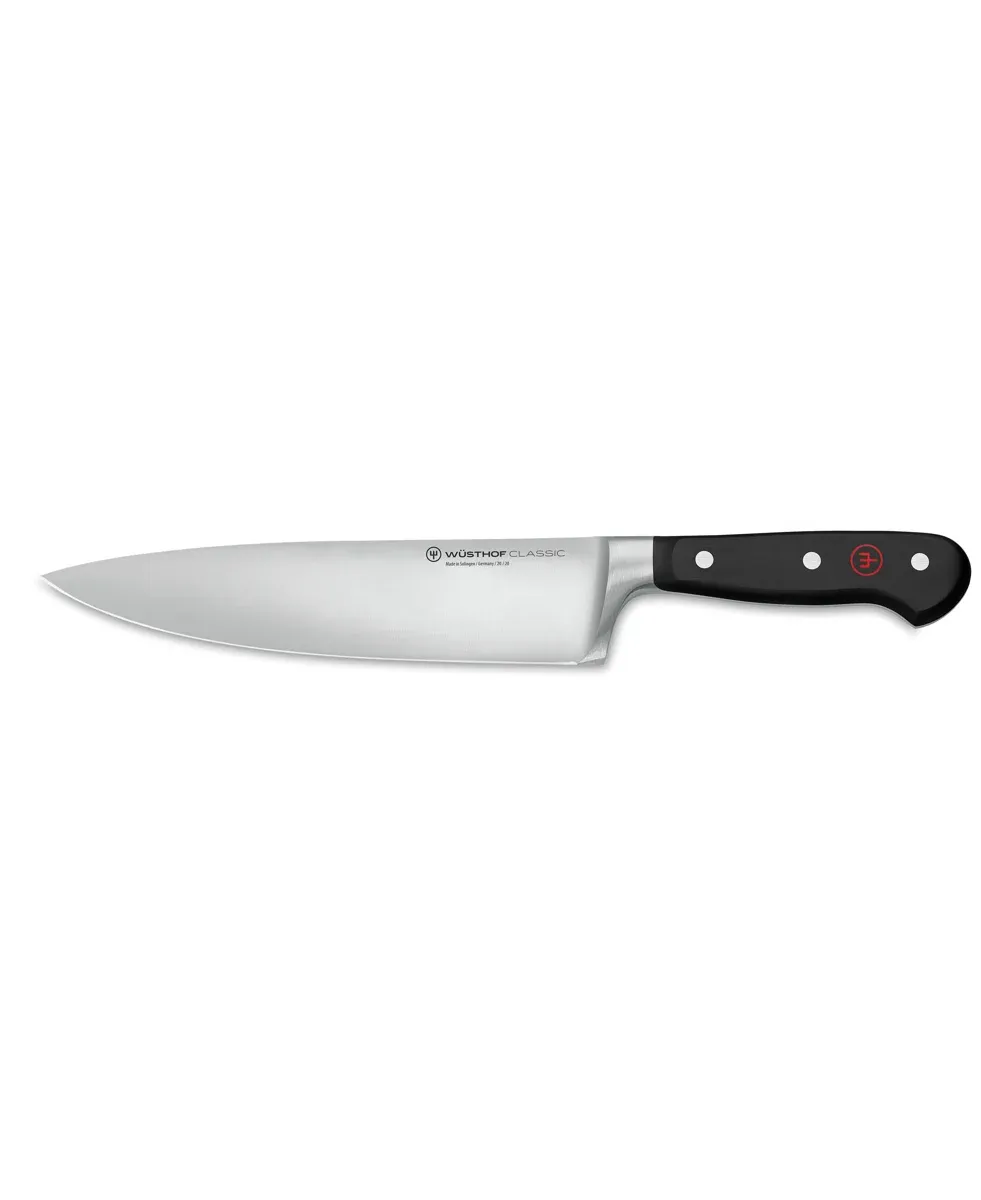
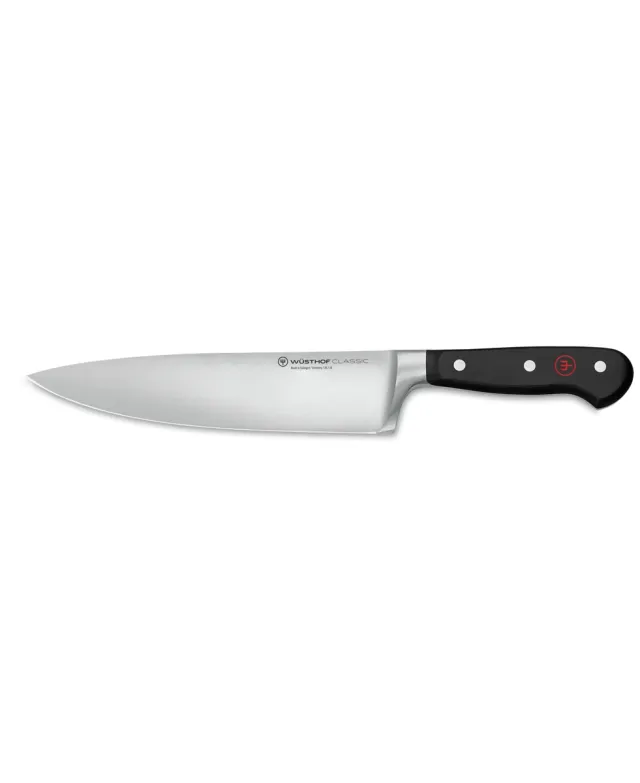
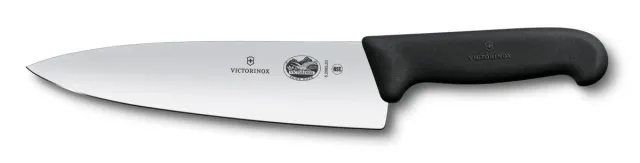
This is the classic Western kitchen-knife steel: about 0.5% carbon and 14–15% chromium, with small amounts of molybdenum and vanadium. Makers run it fairly soft. Wüsthof Classic is 58 HRC, Zwilling Pro is listed at 55–58 HRC, and retailers list Victorinox Fibrox at 56 HRC. The result is a tough, rust-resistant blade that is easy to touch up.
Advantages
Very good corrosion resistance (Knivesandtools); Wüsthof calls its steel corrosion resistant and easy to sharpen
Softer steel is forgiving of rough use and easy to sharpen (Knives and Stones hardness guide)
Drawbacks
Dulls faster than harder Japanese steels, so it needs regular honing
Lower hardness limits how thin an edge it can hold; Knivesandtools notes that the harder the steel, the thinner and sharper it can be ground
Japanese stainless (VG-10 / VG-MAX)
Best forCooks who want a sharper, longer-lasting edge and will hand-wash
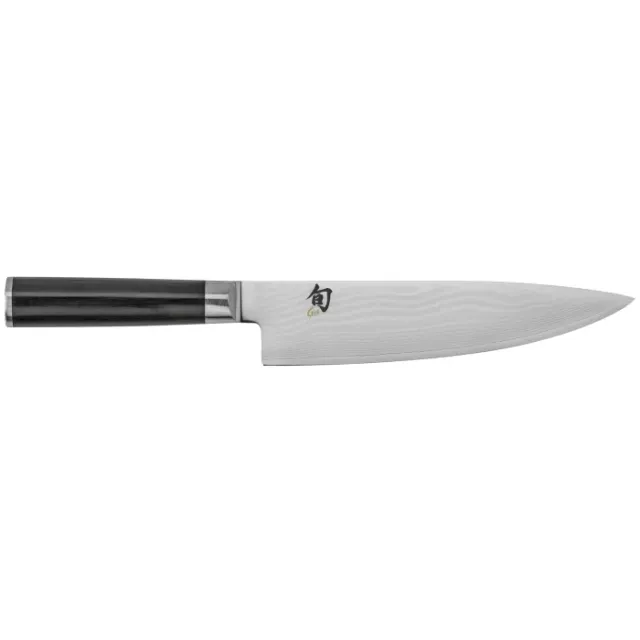
VG-10 is a Takefu stainless steel with about 1% carbon, 15% chromium, 1% molybdenum, 0.2% vanadium and some cobalt, and it usually runs around 60–61 HRC. Shun's proprietary VG-MAX builds on it with more carbon, chromium, tungsten, molybdenum and vanadium. Shun Classic is rated 60–61 HRC with a 16° edge, giving a thinner edge that lasts longer than German steel but needs gentler handling.
Advantages
Harder than most Western knife steels (Shun), so it takes and holds a finer edge
Still stainless; Knivesandtools calls VG-10 easy to sharpen with very good cutting qualities
Drawbacks
Shun says harder steel and finer edges are less tolerant of misuse
Knivesandtools notes VG-10 is more prone to pitting corrosion than lower-carbon stainless; never put it in the dishwasher
Best forEnthusiasts who sharpen on stones and dry knives right away
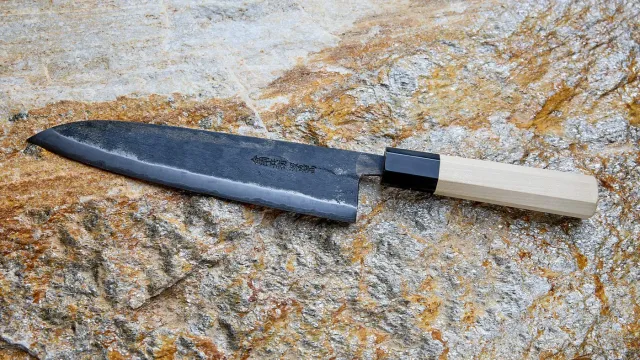
White (Shirogami) and Blue (Aogami) are Yasugi carbon steels from Proterial, formerly Hitachi Metals. White #2 is nearly pure carbon steel at about 1.1% carbon. Blue #2 adds a little chromium and about 1.25% tungsten for longer edge life, and both run around 60–64 HRC. They take a very keen edge and sharpen easily, but they rust if left wet.
Advantages
Takes a very fine edge and sharpens easily; Shun says Aogami #2 sharpens more easily than stainless
High hardness (Shun Narukami Blue #2: 61–62 HRC) for good edge retention, with Blue holding an edge longer than White
Drawbacks
Not stainless: Shun says carbon steel will rust quickly if left wet
Reacts with food and develops a patina, so it needs more attention than stainless
Powder steel (SG2/R2, ZDP-189)
Best forCareful cooks who want the longest edge life
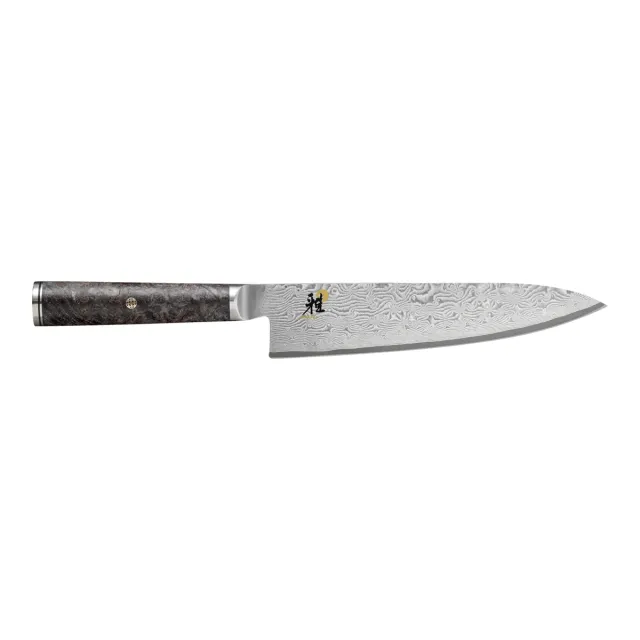
Powder-metallurgy steels are made from fine steel powder for a finer carbide structure. SG2 (sold by Takefu; reportedly Kobelco R2) has about 1.25–1.45% carbon, 14–15% chromium and high molybdenum and vanadium, and runs at 62–64 HRC. ZDP-189 (Hitachi, about 3% carbon and 20% chromium) goes to 64–67 HRC: Miyabi Birchwood SG2 is 63 HRC and Miyabi Black (MC66/ZDP-189) is 66 HRC.
Advantages
Outstanding edge retention; ZDP-189 outlasts SG2 by a wide margin (Knives and Stones, citing Knife Steel Nerds)
SG2 is genuinely stainless and tested tougher than VG-10 at the same hardness (Knife Steel Nerds: 6.5 vs 5.8 ft-lbs)
Drawbacks
Harder to sharpen: SG2 is harder than VG-10 but workable, while ZDP-189 is very hard and works best on diamond stones
Brittle at very high hardness: chip-prone at 65+ HRC, and Knifewear warns against bones, pits and frozen food
Entry-level stamped stainless
Best forTight budgets, first apartments, or knives you don't want to baby
Budget knives are usually stamped (cut from sheet steel) from a softer stainless that the maker often doesn't name. Henckels Solution, for example, is a stamped 'high-quality stainless steel' blade rated 50–54 HRC that sells for $19.99. Budget steels such as 420J2 are highly stain-resistant but soft. Stamped does not always mean low-grade: Victorinox Fibrox is stamped, and retailers list it in X50CrMoV15 at 56 HRC.
Advantages
Very affordable (Henckels Solution 8-inch $19.99) and some, like Henckels Solution, are labeled dishwasher safe
Soft, highly stain-resistant steel that is easy to bring back on almost any sharpener
Drawbacks
Low hardness (50–54 HRC on Henckels Solution) means the edge dulls faster
Steel grade and hardness are often not disclosed; Wüsthof notes stamped blades go through 14 production steps versus 40+ for its forged knives
For most home cooks, the best steel for kitchen knives is a German-style stainless such as X50CrMoV15 (about 56–58 HRC): it resists rust, sharpens easily and forgives rough use. If you hand-wash, dry right away and want a thinner edge that lasts longer, choose a Japanese stainless (VG-10 or VG-MAX, about 60–61 HRC) or a powder steel like SG2, and pick carbon steel such as Shirogami or Aogami only if you are happy to wipe it dry every time.
How we compared
We grouped common kitchen-knife steels into five families and compared what steel makers and knife makers publish. That includes composition, hardness (HRC) as stated by Wüsthof, Zwilling, Henckels, Shun and Miyabi, and corrosion and care guidance, plus metallurgical data compiled by Knife Steel Nerds and steel databases such as zknives. Prices are maker list prices seen in October 2026 and change often. We did not test these knives hands-on.
Steel is only half the story
The same steel can perform very differently depending on heat treatment and edge geometry. Knives and Stones points out that a powder-metallurgy label alone doesn’t guarantee a harder, tougher or more chip-resistant knife. Victorinox warns that overheating a blade during regrinding lowers its hardness, edge retention and corrosion resistance. Construction matters too: Wüsthof says its forged blades go through more than 40 production steps and include a bolster for balance, while its laser-cut stamped blades take 14 steps and cost less. Compare the stated hardness, edge angle and care instructions, not just the steel name.
There is no single best steel, only the right trade-off for you. German-style stainless such as X50CrMoV15 (about 56–58 HRC) is the easiest to live with. Japanese stainless like VG-10 (about 60–61 HRC) and powder steels like SG2 (62–64 HRC) hold a finer edge longer but need gentler use and handwashing.
What does HRC mean, and is harder steel always better?
HRC is the Rockwell C hardness scale. Kitchen knives typically range from about 55 to 66 or more. Harder steel holds an edge longer and can be ground thinner, but Knivesandtools notes that hardness often comes with brittleness. Knives and Stones calls 65+ HRC more prone to chipping, so higher is not automatically better.
Can stainless steel knives rust?
Yes. Shun says stainless steel is rust-resistant, not rust-proof. Victorinox notes that fruit acids or salt water left on a blade can corrode it over time. Wash and dry knives promptly and keep them out of the dishwasher unless the maker says otherwise.
Is carbon steel better than stainless steel for kitchen knives?
Carbon steels such as Shirogami and Aogami take a very keen edge and sharpen easily, and Shun says Aogami #2 sharpens more easily than stainless. They rust quickly if left wet and develop a patina, so they suit cooks who dry their knives right away. Stainless-clad carbon knives reduce the exposed area but still need prompt drying.
What are the best steel types for kitchen knives?
Kitchen knife steels fall into five families. German-style stainless such as X50CrMoV15 is tough, rust-resistant and easy to sharpen. Japanese stainless (VG-10 or VG-MAX) takes a thinner, longer-lasting edge, carbon steels like Shirogami and Aogami take a very keen edge but rust if left wet, and powder steels such as SG2 and ZDP-189 hold an edge longest. Entry-level stamped stainless suits tight budgets.
What is the best stainless steel for kitchen knives?
For low maintenance, German-style stainless such as X50CrMoV15 (about 55 to 58 HRC) is the safe choice: it resists rust, is forgiving of rough use and is easy to touch up. If you hand-wash and want a longer-lasting edge, Japanese VG-10 (about 60 to 61 HRC) is still stainless but less tolerant of misuse, and it should never go in the dishwasher.
Is powder steel like SG2 worth it for kitchen knives?
Powder steels give the longest edge life of the group. SG2 is genuinely stainless, runs at 62 to 64 HRC and tested tougher than VG-10 at the same hardness, while ZDP-189 goes to 64 to 67 HRC. The trade-offs are that they are harder to sharpen and can chip at very high hardness, so they suit careful cooks who hand-wash and avoid bones and frozen food.