
KNIVES · BUYING GUIDE

Best Japanese Kitchen Knives

Updated

The best Japanese kitchen knives: gyuto, santoku and nakiri knives from Global, MAC, Tojiro, Shun and MIYABI, compared by steel, hardness, edge angle, weight and care.

We may earn a commission when you buy through links on this page.

Our picks at a glance

ProductAwardScoreShop
GLOBAL Classic 8" Japanese Chef's Knife CROMOVA 18 stainless steel (chromium, molybdenum, vanadium)
Best overall 7.6 Check price
MAC Chef Series 8 1/2" Chef's Knife (HB-85) MAC original molybdenum steel
Best budget 7.1 Check price
MIYABI Birchwood SG2 7-inch, Fine Edge Santoku Knife SG2 micro-carbide powder steel core (MC63), flower Damascus cladding
Best premium 8.3 Check price
Shun Classic 6.5" Nakiri VG-MAX core with 69-layer stainless Damascus
Best for vegetables 7.8 Check price
How the editorial score works

The score rates documented features and practical tradeoffs on a 10-point scale, using the weighted criteria below. An 8 means strong support with one clear limit; a 9 means particularly complete support with minor limits. It is our editorial judgment from manufacturer information, not a hands-on test or a customer rating.

  • Steel & edge35%
  • Handle & balance25%
  • Versatility20%
  • Care & warranty20%

The order of the picks also reflects who each product suits best, so it is not decided by the score alone. More on our method

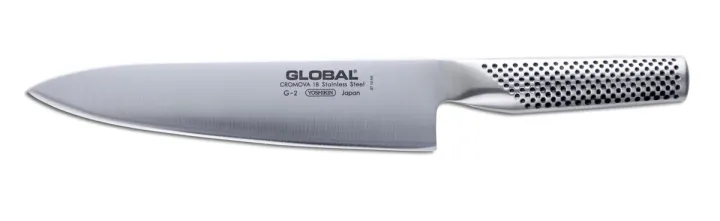
  1. 01 · Best overall
    GLOBAL Classic 8" Japanese Chef's Knife

    GLOBAL · G-2

    GLOBAL Classic 8" Japanese Chef's Knife

    7.6/ 10
    Editorial score
    Steel & edge
    7.5
    Handle
    8.0
    Versatility
    8.5
    Care
    6.5
    Why this score?
    Steel & edge · 7.5
    CROMOVA 18 stainless, Rockwell C56-C58; double-bevel edge for either hand
    Handle & balance · 8.0
    One-piece, sand-filled hollow handle at 170 g; all-metal grip feels unlike wood
    Versatility · 8.5
    8-inch gyuto suited to everyday chopping and slicing
    Care & warranty · 6.5
    Hand wash only; GLOBAL says not to use the dishwasher

    Based on documented features and practical tradeoffs, not a hands-on test. Assessment: October 7, 2026. How the editorial score works

    Manufacturer information

    Best forCooks who want a light, all-steel gyuto for everyday chopping and slicing

    GLOBAL's best-known chef's knife is made from a single piece of CROMOVA 18 stainless steel, with a hollow stainless handle filled with sand for balance and a dimpled grip. Yoshikin, the Japanese maker, lists it at 170 g with a 20 cm blade.

    Strengths

    • One-piece stainless construction with no seam between blade and handle
    • Light at 170 g, with a double-bevel edge for right- or left-handed use

    Weaknesses

    • Hand wash only; GLOBAL says not to put it in the dishwasher
    • All-metal handle feels very different from a wooden or composite grip

    Dimensions, material and details

    Dimensions
    Overall 33 cm (13 in); blade 20 cm (8 in) long x 4.5 cm wide
    Blade material
    CROMOVA 18 stainless steel (chromium, molybdenum, vanadium)
    Handle
    18-8 stainless steel, hollow and sand-filled
    Hardness
    Rockwell C56-C58
    Weight
    170 g (about 6 oz)
    Care
    Hand wash; not dishwasher safe

    Details checked against the globalcutleryusa.com product page.

    Check price at Amazon
  2. 02 · Best budget
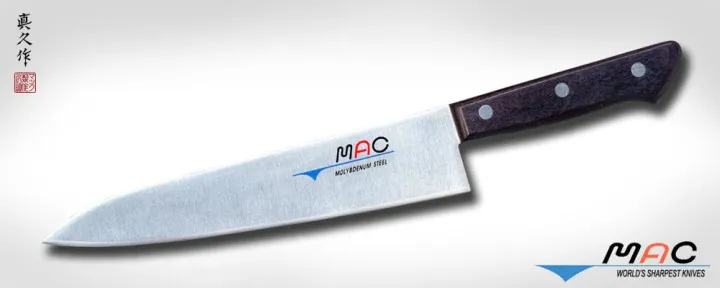
    MAC Chef Series 8 1/2" Chef's Knife (HB-85)

    MAC · HB-85

    MAC Chef Series 8 1/2" Chef's Knife (HB-85)

    7.1/ 10
    Editorial score
    Steel & edge
    7.0
    Handle
    6.5
    Versatility
    8.0
    Care
    7.0
    Why this score?
    Steel & edge · 7.0
    Molybdenum steel, thin 2.0 mm blade; hardness and edge angle not stated
    Handle & balance · 6.5
    Very light at 4.9 oz, but handle material unstated and narrow knuckle clearance
    Versatility · 8.0
    Gyuto-style 8 3/8-inch blade covers general chef's knife tasks
    Care & warranty · 7.0
    25-year limited warranty; product page gives no care instructions

    Based on documented features and practical tradeoffs, not a hands-on test. Assessment: October 7, 2026. How the editorial score works

    Manufacturer information

    Best forAnyone who wants a very light, thin Japanese gyuto at a modest price

    MAC calls this the lightest chef's knife it makes: a 4.9 oz, 8 3/8-inch gyuto-style blade only 2.0 mm thick. Chef Series blades use MAC's original molybdenum steel, and MAC says every step of its knifemaking is done in Japan.

    Strengths

    • Very light at 4.9 oz with a thin 2.0 mm blade
    • Lowest list price in this guide, with MAC's 25-year limited warranty

    Weaknesses

    • Product page does not state handle material or care instructions
    • Relatively narrow 1.63-inch blade height gives less knuckle clearance than taller chef's knives

    Dimensions, material and details

    Dimensions
    Knife length 12.94 in; blade 8.38 in long x 1.63 in high
    Blade material
    MAC original molybdenum steel
    Blade thickness
    2.0 mm
    Weight
    4.9 oz
    Warranty
    25-year limited (defects in materials or workmanship)

    Details checked against the macknife.com product page.

    Check price at Amazon

  3. 03
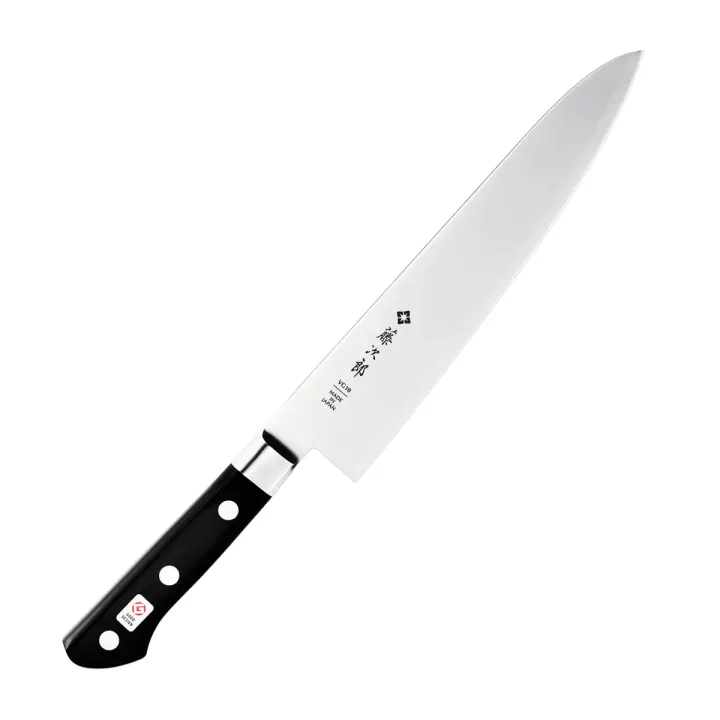
    TOJIRO CLASSIC Gyuto 210mm (formerly Tojiro DP)

    Tojiro · F-808

    TOJIRO CLASSIC Gyuto 210mm (formerly Tojiro DP)

    7.8/ 10
    Editorial score
    Steel & edge
    8.0
    Handle
    7.5
    Versatility
    8.5
    Care
    7.0
    Why this score?
    Steel & edge · 8.0
    VG10 core in 13-chrome stainless cladding; double bevel for both hands
    Handle & balance · 7.5
    Bolster and composite handle feel familiar, but about 200 g is heavier than rivals
    Versatility · 8.5
    210 mm gyuto handles general chef's knife work
    Care & warranty · 7.0
    Stainless cladding resists corrosion; no warranty or care guidance listed

    Based on documented features and practical tradeoffs, not a hands-on test. Assessment: October 7, 2026. How the editorial score works

    Manufacturer information

    Best forHome cooks who want a VG10 gyuto with a conventional Western-style handle

    Tojiro's 210 mm gyuto has a VG10 steel core clad in 13-chrome stainless steel, which Tojiro says pairs professional sharpness with easy upkeep. It has a bolster and a laminated composite handle, and the double-bevel edge suits right- and left-handed users.

    Strengths

    • VG10 core with stainless cladding for corrosion resistance
    • Double-bevel edge for right- and left-handed cooks

    Weaknesses

    • Tojiro's official product page and shop are in Japanese only
    • At about 200 g, heavier than the GLOBAL and MAC gyutos

    Dimensions, material and details

    Dimensions
    Overall about 335 mm (13.2 in); blade about 210 mm (8.3 in)
    Blade material
    VG10 core with 13-chrome stainless steel cladding
    Handle
    Laminated reinforced composite, with bolster
    Weight
    About 200 g (7 oz)
    Edge
    Double bevel (right- and left-handed)

    Details checked against the store.tojiro.net product page.

    Check price at Amazon
  4. 04 · Best for vegetables
    Shun Classic 6.5" Nakiri

    Shun · DM0728

    Shun Classic 6.5" Nakiri

    7.8/ 10
    Editorial score
    Steel & edge
    8.5
    Handle
    8.0
    Versatility
    6.5
    Care
    7.5
    Why this score?
    Steel & edge · 8.5
    VG-MAX core, 69-layer Damascus, 16 degree edge per side
    Handle & balance · 8.0
    D-shaped Pakkawood handle, 215 g; Shun says it suits left- and right-handers
    Versatility · 6.5
    Straight-edge nakiri is a specialist vegetable shape with no pointed tip
    Care & warranty · 7.5
    Limited lifetime warranty; hand washing is the safe default for Japanese knives

    Based on documented features and practical tradeoffs, not a hands-on test. Assessment: October 7, 2026. How the editorial score works

    Manufacturer information

    Best forCooks who prep a lot of vegetables and like a push-cutting technique

    A Japanese vegetable knife with a straight edge and squared tip, so more of the blade meets the board on each push cut. It has a VG-MAX core clad in stainless Damascus, a D-shaped Pakkawood handle and is handcrafted in Japan.

    Strengths

    • Straight 6.5-inch edge made for clean push cuts through vegetables
    • Shun says the D-shaped handle suits left- and right-handed users

    Weaknesses

    • A specialist shape with no pointed tip for detail work
    • Costs more than the MAC or Tojiro general-purpose gyutos

    Dimensions, material and details

    Dimensions
    2.0 in H x 11.9 in L x 0.8 in W; blade 6.5 in (165 mm)
    Blade material
    VG-MAX core with 69-layer stainless Damascus
    Handle
    Ebony color Pakkawood, 5.0 in (127 mm)
    Weight
    7.6 oz (215 g)
    Edge angle
    16° each side
    Warranty
    Limited lifetime

    Details checked against the shun.kaiusa.com product page.

    Check price at Amazon
  5. 05 · Best premium
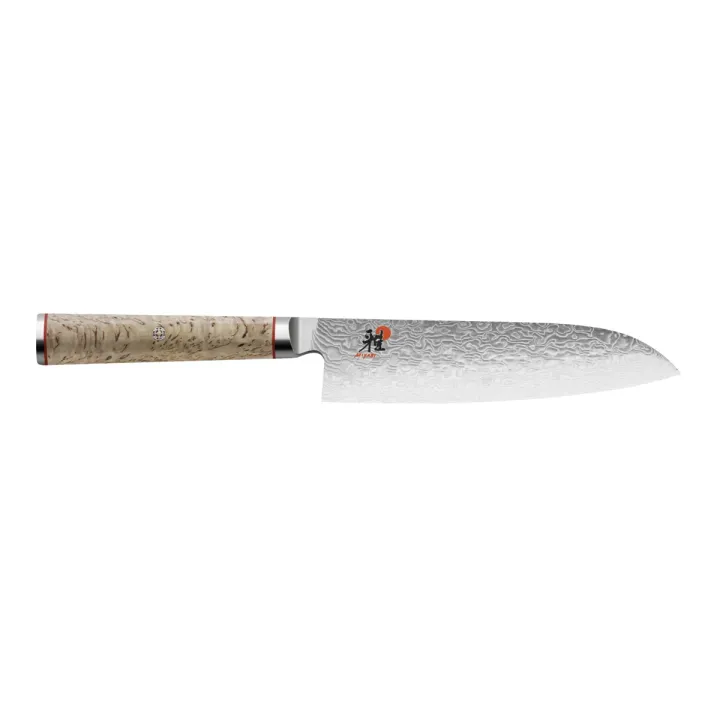
    MIYABI Birchwood SG2 7-inch, Fine Edge Santoku Knife

    MIYABI · 34374-183

    MIYABI Birchwood SG2 7-inch, Fine Edge Santoku Knife

    8.3/ 10
    Editorial score
    Steel & edge
    9.5
    Handle
    8.5
    Versatility
    7.5
    Care
    6.5
    Why this score?
    Steel & edge · 9.5
    SG2 powder steel at 63 HRC, hand-honed 9.5 to 12 degree edge
    Handle & balance · 8.5
    Karelian birch handle with concealed tang; 0.39 lbs
    Versatility · 7.5
    Santoku is a shorter all-rounder for mincing, slicing and dicing
    Care & warranty · 6.5
    Hand wash only; very hard thin edge suits careful use, not bones

    Based on documented features and practical tradeoffs, not a hands-on test. Assessment: October 7, 2026. How the editorial score works

    Manufacturer information

    Best forKeen cooks who want a handcrafted, very hard santoku and will wash it by hand

    A 7-inch santoku with an SG2 micro-carbide powder steel core under a flower Damascus pattern, ice-hardened to 63 HRC and hand-honed to a 9.5° to 12° edge. The Karelian birch handle and Seki, Japan craftsmanship make it the showpiece of this list.

    Strengths

    • Very hard SG2 steel (63 HRC) with a thin 9.5° to 12° edge
    • Handcrafted in Seki, Japan, with a Karelian birch handle

    Weaknesses

    • Hand wash only
    • Most expensive knife in this guide

    Dimensions, material and details

    Dimensions
    12.44 in L x 1.89 in H x 0.91 in W; blade 7.09 in
    Blade material
    SG2 micro-carbide powder steel core (MC63), flower Damascus cladding
    Hardness
    63 HRC
    Edge angle
    9.5° to 12°
    Weight
    0.39 lbs
    Handle
    Karelian (Masur) birch, concealed tang

    Details checked against the zwilling.com product page.

    Check price at Amazon

COMPARE

Side-by-side comparison

Select a column heading to sort.

GLOBAL Classic 8" Japanese Chef's Knife Cooks who want a light, all-steel gyuto for everyday chopping and slicingOverall 33 cm (13 in); blade 20 cm (8 in) long x 4.5 cm wideCROMOVA 18 stainless steel (chromium, molybdenum, vanadium)170 g (about 6 oz)
MAC Chef Series 8 1/2" Chef's Knife (HB-85) Anyone who wants a very light, thin Japanese gyuto at a modest priceKnife length 12.94 in; blade 8.38 in long x 1.63 in highMAC original molybdenum steel4.9 oz
TOJIRO CLASSIC Gyuto 210mm (formerly Tojiro DP) Home cooks who want a VG10 gyuto with a conventional Western-style handleOverall about 335 mm (13.2 in); blade about 210 mm (8.3 in)VG10 core with 13-chrome stainless steel claddingAbout 200 g (7 oz)
Shun Classic 6.5" Nakiri Cooks who prep a lot of vegetables and like a push-cutting technique2.0 in H x 11.9 in L x 0.8 in W; blade 6.5 in (165 mm)VG-MAX core with 69-layer stainless Damascus7.6 oz (215 g)
MIYABI Birchwood SG2 7-inch, Fine Edge Santoku Knife Keen cooks who want a handcrafted, very hard santoku and will wash it by hand12.44 in L x 1.89 in H x 0.91 in W; blade 7.09 inSG2 micro-carbide powder steel core (MC63), flower Damascus cladding0.39 lbs

How we chose

We compared Japanese-made gyutos, a santoku and a nakiri from established Japanese makers on blade steel and hardness, edge angle and bevel, weight and dimensions, handle style, care requirements and warranty, using the manufacturers’ published specifications. We looked for a spread of shapes and prices, from a light molybdenum-steel gyuto to a handcrafted SG2 Damascus santoku. We did not test these knives hands-on.

What to look for in a Japanese kitchen knife

Choose the shape for the way you cook. A gyuto (Japanese chef’s knife) is the most versatile choice and handles both rocking and slicing cuts. A santoku is shorter and flatter for chopping and dicing, while a nakiri is a dedicated vegetable knife for straight up-and-down push cuts.

Understand steel and hardness. Japanese blades are usually harder and thinner than German ones, which helps them take and hold a fine edge. The trade-off is that very hard edges can chip if you twist the blade or cut through bones, frozen food or hard squash, so match the steel to how carefully you work.

Check the bevel before buying. Most Japanese knives sold for home kitchens have a double-bevel edge that works for right- and left-handed cooks. Traditional single-bevel knives are sharpened on one side only and are usually made for one hand, so left-handers should confirm the edge before ordering.

Think about the handle and weight. Western-style handles with a bolster feel familiar to most home cooks, while Japanese-style (wa) and all-steel handles feel lighter and different in the hand. Light knives reduce fatigue during long prep, but some cooks prefer a bit more heft for cutting through dense foods.

Plan for care and sharpening. Japanese knives should be washed by hand, dried right away and stored in a block, sheath or on a magnetic strip so the edge does not knock against other tools. Use a wooden or soft plastic cutting board, and budget for a whetstone or professional sharpening to keep the thin edge at its best.

Frequently asked questions

What is the difference between a gyuto, a santoku and a nakiri?

A gyuto is the Japanese take on the Western chef's knife, like the GLOBAL G-2, MAC HB-85 and Tojiro F-808, and handles meat, fish and vegetables. A santoku, such as the 7-inch MIYABI Birchwood, is a shorter all-rounder that Zwilling describes as good for mincing, slicing and dicing. A nakiri like the Shun Classic DM0728 has a straight edge and squared tip for push-cutting vegetables.

Can Japanese knives go in the dishwasher?

Not these. GLOBAL says its knives should not go in the dishwasher, and MIYABI lists the Birchwood santoku as hand wash only. Washing by hand and drying right away is the safe default for every knife in this guide.

Are Japanese knives OK for left-handed cooks?

Most of these are. Yoshikin lists the GLOBAL G-2 and Tojiro lists its F-808 gyuto with double-bevel edges for right- and left-handed use, and Shun says the Classic Nakiri's D-shaped handle suits both. Traditional single-bevel Japanese knives are different, so check the edge type before you buy.

Why are Japanese knives harder than German knives?

Japanese makers often use harder steels so they can grind thinner, sharper edges. The MIYABI Birchwood is ice-hardened to 63 HRC with a 9.5° to 12° edge, while the GLOBAL G-2 is 56 to 58 HRC and the Shun Classic Nakiri has a 16° edge per side. Harder, thinner edges stay sharp a long time but are best kept away from bones and frozen food.

What is the best Japanese kitchen knife?

The GLOBAL Classic 8-inch gyuto is the best overall pick: a light, one-piece stainless knife that suits right- and left-handed cooks. The MAC Chef Series 8 1/2-inch is the budget pick, the Shun Classic Nakiri is best for vegetables, and the MIYABI Birchwood SG2 santoku is the premium choice. The right one depends on whether you want a gyuto, santoku or nakiri shape.