The best kitchen countertops: quartz, granite, marble, butcher block, laminate, solid surface and porcelain or concrete compared by cost, durability, heat and stain resistance and care.
Best forBusy cooks who want a low-maintenance, consistent-looking counter
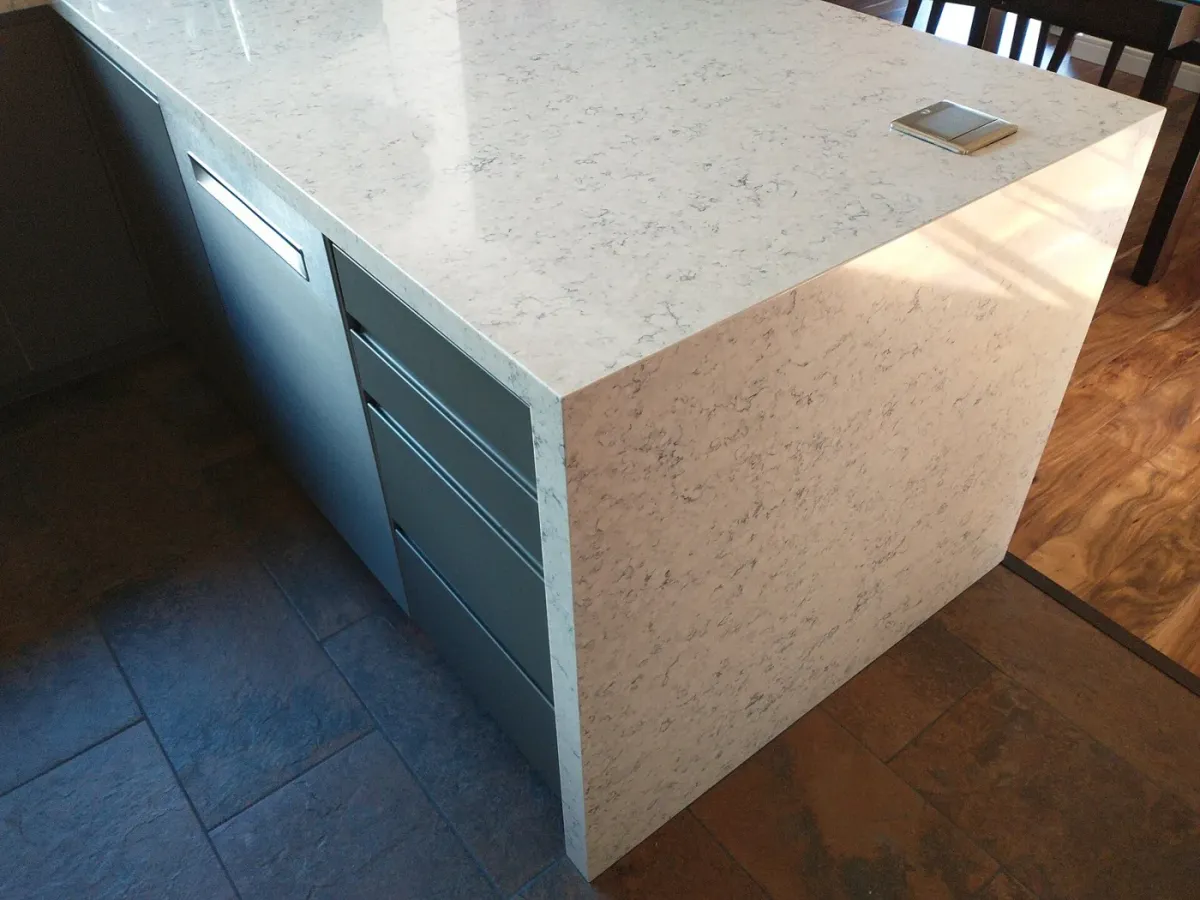
An engineered slab made from crushed natural quartz bound with resin and pigments. Caesarstone describes its surfaces as nonporous and virtually maintenance-free, and HomeAdvisor notes that quartz does not need sealing. Unlike stone, it can scorch, so hot pans need a trivet.
Advantages
Nonporous and never needs sealing
Resists chipping, cracking and stains (HomeAdvisor)
Drawbacks
Hot pans or slow cookers can discolor it; Caesarstone says to always use a trivet
Darker colors can fade in strong sunlight (Natural Stone Institute)
Best forNatural stone that tolerates hot pans and heavy use
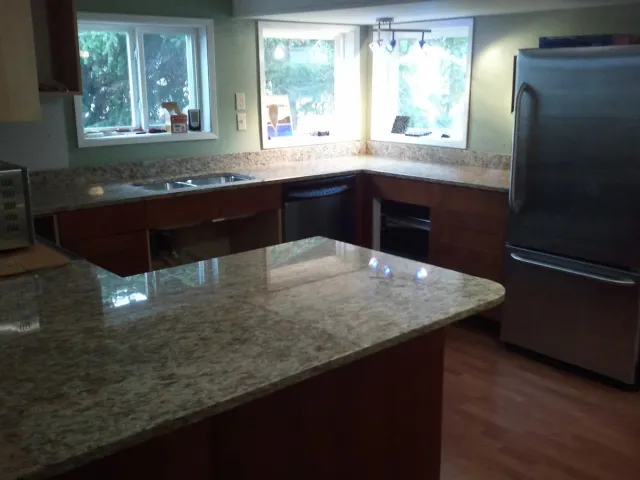
Natural igneous stone cut into slabs, so no two counters look the same. The Natural Stone Institute says granite handles heat better than engineered quartz and scratches less than marble. It is porous, though: HomeAdvisor recommends resealing about once a year.
Advantages
More heat-tolerant than quartz (NSI)
Very long-lived; HomeAdvisor says it can last 100 years or more with upkeep
Drawbacks
Porous, so it needs periodic sealing to prevent stains
Chips, cracks and burns are hard to repair (HomeAdvisor)
Best forBakers and design-led kitchens that accept a lived-in patina
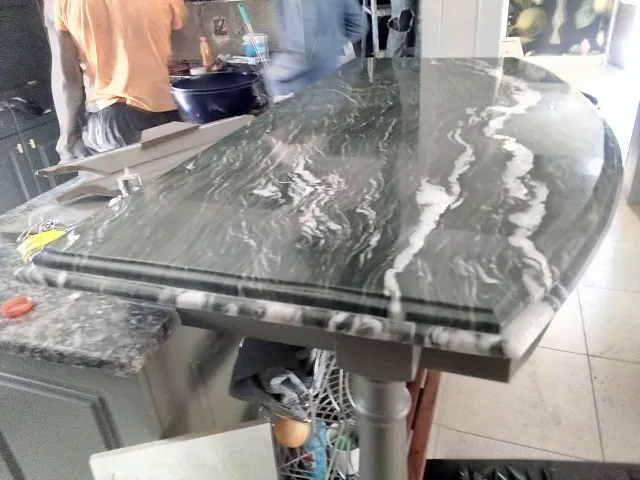
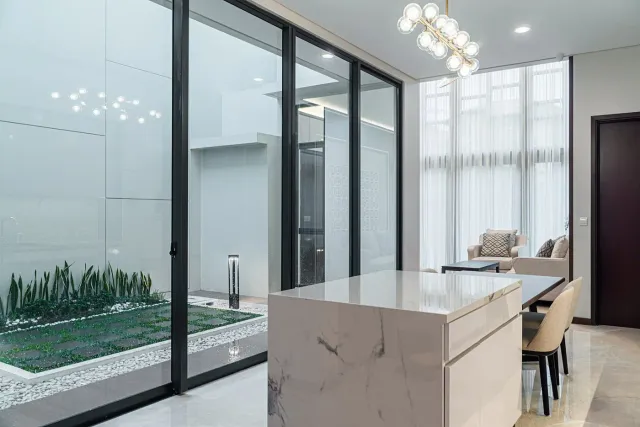
A softer, calcite-based natural stone prized for its veining. The Natural Stone Institute says marble scratches more easily than granite and etches when it meets acids such as lemon juice or vinegar, and sealing does not prevent etching. Over time it develops a patina, which a honed finish helps disguise.
Advantages
Classic look with soft veining
More heat-tolerant than engineered quartz (NSI)
Drawbacks
Etches from acidic foods and drinks even when sealed
Best forA warm, repairable surface on an island or prep zone
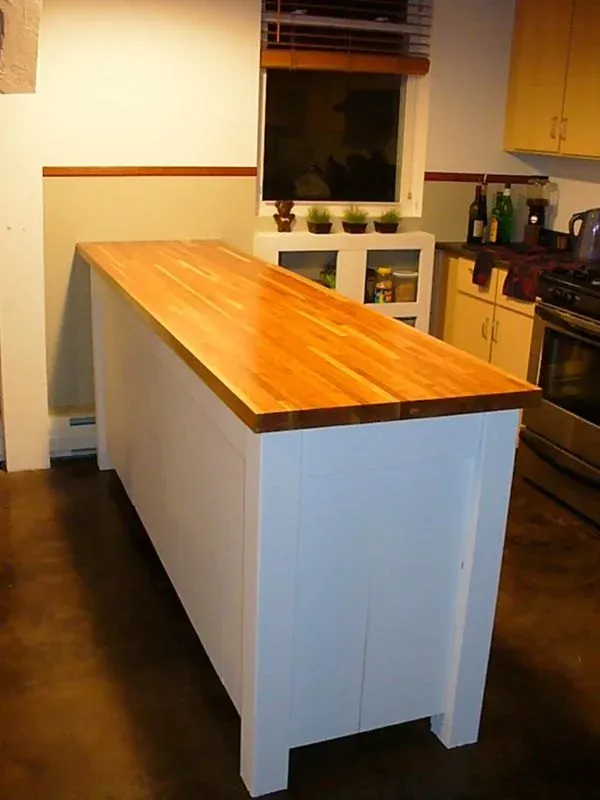
Strips of hardwood glued into a thick slab, usually finished with oil. It brings warmth and can be sanded to remove scratches, but the Natural Stone Institute notes that wood scratches and stains easily and needs regular upkeep. John Boos recommends oiling its blocks at least once a month.
Advantages
Minor scratches can be sanded out (John Boos)
Warm look that pairs well with stone elsewhere
Drawbacks
Scratches and stains easily (NSI)
Needs regular oiling or a sealed finish to resist water
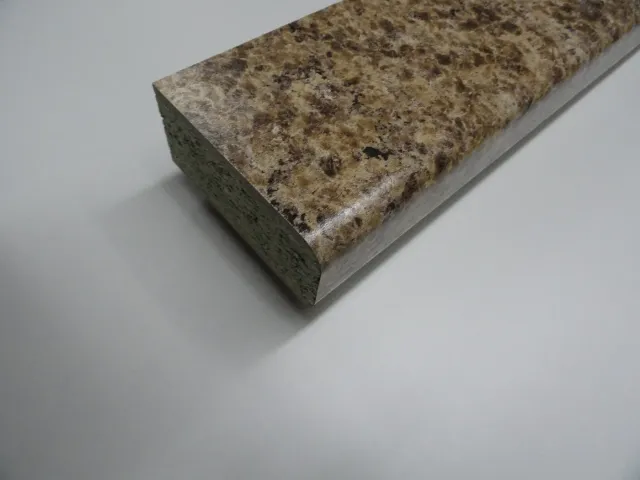
A thin decorative plastic layer bonded to particleboard or plywood, sold under names such as Formica and Wilsonart. The Natural Stone Institute calls it affordable, durable and easy to clean for the price. It is the least heat- and knife-tolerant option here, and HomeAdvisor expects replacement after 10 to 20 years.
Advantages
Lowest cost: HomeAdvisor averages about $35 per sq ft installed
Easy to clean with a damp cloth and mild soap (Wilsonart)
Drawbacks
Hot pans can mar the surface; Wilsonart says to always use a trivet
Shorter life: about 10 to 20 years, according to HomeAdvisor
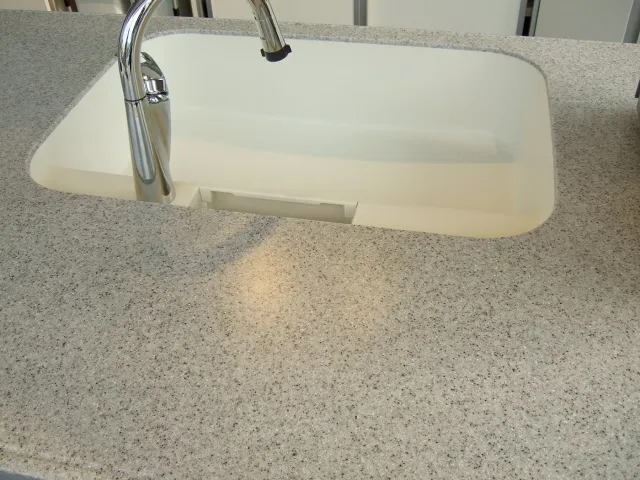
An acrylic-based material such as Corian or Hi-Macs that is the same all the way through, so it can be joined almost seamlessly and paired with integrated sinks. Corian says minor cuts and scratches can be sanded out and most damage can be repaired on site. It is more easily scratched and heat-damaged than stone.
Advantages
Renewable: minor scratches can be buffed out, and most damage repaired (Corian)
Seamless joins and integrated sinks (NSI)
Drawbacks
Scratches, stains and heat damage more easily than stone (NSI)
Best forModern kitchens that want a custom or ultra-hard slab
Two modern slab looks. Concrete is cast to order and gives an industrial look, but HomeAdvisor says most of its cost is labor and it needs sealing every year, and the Natural Stone Institute warns it stains easily even when sealed. Porcelain (sintered) slabs are heat-, scratch- and UV-resistant and nonporous, but they are thin, hard to repair if chipped, and need skilled installers.
Advantages
Porcelain resists heat, scratches, chemicals and UV light and is nonporous (NSI)
Concrete can be colored, stained or polished to order (HomeAdvisor)
Drawbacks
Concrete is porous and can stain even with sealer; it also needs annual sealing
Porcelain is thin and not through-body, so chips and scratches are hard to repair
For most kitchens, quartz is the best all-round countertop: it is nonporous, never needs sealing and resists chips and stains, though hot pans need a trivet. Choose granite if you want natural stone that handles heat well, laminate or butcher block if budget comes first, and marble only if you are happy for it to etch and develop a patina.
How we compared
We compared seven countertop materials on heat, scratch and stain resistance, upkeep, repairability and cost. Our sources were manufacturer care guides (Caesarstone, Corian, Wilsonart, John Boos), the Natural Stone Institute and HomeAdvisor’s 2026 cost guides. The Natural Stone Institute is a stone trade group, so we used its comparisons for material facts rather than as a verdict. Prices are national averages and vary by region, slab grade, edge profile and cutouts. We did not test these surfaces hands-on.
Mistakes to avoid
Treating “stain-resistant” as “heat-proof.” Quartz, solid surface and laminate makers all recommend trivets for hot pans.
Cleaning stone with vinegar or bleach. Acidic and harsh cleaners can etch marble and break down sealers on granite (Natural Stone Institute).
Cutting directly on the counter. Corian, Wilsonart and Caesarstone all say to use a cutting board.
Forgetting upkeep. Granite and concrete need resealing, and butcher block needs regular oiling (HomeAdvisor, John Boos).
Budgeting for the slab only. Removal of the old top, sink cutouts, edge profiles and plumbing reconnection all add cost (HomeAdvisor).
For everyday durability, quartz and granite lead. HomeAdvisor says quartz resists chipping and cracking and never needs sealing, and granite can last 100 years or more if you reseal it. HomeAdvisor expects laminate to need replacing after 10 to 20 years.
Is quartz or granite better for a kitchen?
Quartz is easier to live with: it is nonporous and needs no sealing (Caesarstone, HomeAdvisor). Granite is better with heat. The Natural Stone Institute says quartz can scorch from hot pans and dark colors can fade in sun, while granite needs periodic sealing; HomeAdvisor suggests about once a year.
Can I put hot pans directly on my countertop?
Use a trivet on almost every surface. Caesarstone (quartz), Corian (solid surface) and Wilsonart (laminate) all tell owners to put hot cookware on a trivet or hot pad. The Natural Stone Institute says granite and marble tolerate heat better than engineered quartz.
How much do new kitchen countertops cost?
HomeAdvisor puts a typical countertop replacement at $1,882 to $4,484, with an average of about $3,160. Material is the biggest factor, and labor runs about $15 to $30 per sq ft. Removing and disposing of the old top adds roughly $50 to $300.
What is the best countertop material for a kitchen?
For most kitchens, quartz: it is nonporous, never needs sealing and resists chips and stains, though hot pans need a trivet. Granite suits you if you want natural stone that handles heat well. Laminate or butcher block make sense when budget comes first, and marble only if you are happy for it to etch and develop a patina.
What is the best cheap kitchen countertop?
Laminate is the lowest-cost option on our list, and the Natural Stone Institute calls it affordable, durable and easy to clean for the price. Its trade-offs are poor heat and knife tolerance, and HomeAdvisor expects replacement after 10 to 20 years. Butcher block is another budget-friendlier pick, but it needs regular oiling.
What is the best stone for kitchen countertops?
Granite is the best natural stone for most cooks. The Natural Stone Institute says it handles heat better than engineered quartz and scratches less than marble, though it is porous and needs periodic sealing. Marble is prized for its veining but etches from acids such as lemon juice or vinegar, even when sealed.