The best way to sharpen kitchen knives depends on your skill and knives: whetstone, pull-through, electric, guided sharpeners, honing rods and professional services compared by control, cost and care.
COMPARE
The options compared
Cost, durability and care at a glance. Select a column heading to sort.
$ per knife (MAC: $8–$12 for MAC knives, $15–$25 for other brands; Knife Aid via Zwilling: $59 for 4 knives)
MAC notes that about 1/32 inch of steel is ground off in a normal sharpening
Hone between visits; Shun says most home cooks need sharpening only once or twice a year
Whetstone (sharpening stone)
Best forCooks who want the most control and will practice
You slide the blade across a wet abrasive stone at a steady angle, usually starting on a coarse side and finishing on a fine one. Knife makers such as Wüsthof and Shun present stones as the way to sharpen with the most control, and Shun notes that Japanese knives are traditionally sharpened this way. The catch is that you have to hold the angle yourself.
Advantages
Most control over angle and finish; Shun says it can restore a blade while keeping its intended edge geometry
Works for Western and Japanese knives at whatever angle the maker recommends (e.g. 14.5° for Wüsthof, 16° for Shun)
Drawbacks
Takes skill and time to learn, according to Consumer Reports
Needs prep and cleanup: Wüsthof says to soak the stone about ten minutes and keep it wet while sharpening
Manual pull-through sharpener
Best forQuick, low-cost touch-ups on Western double-bevel knives
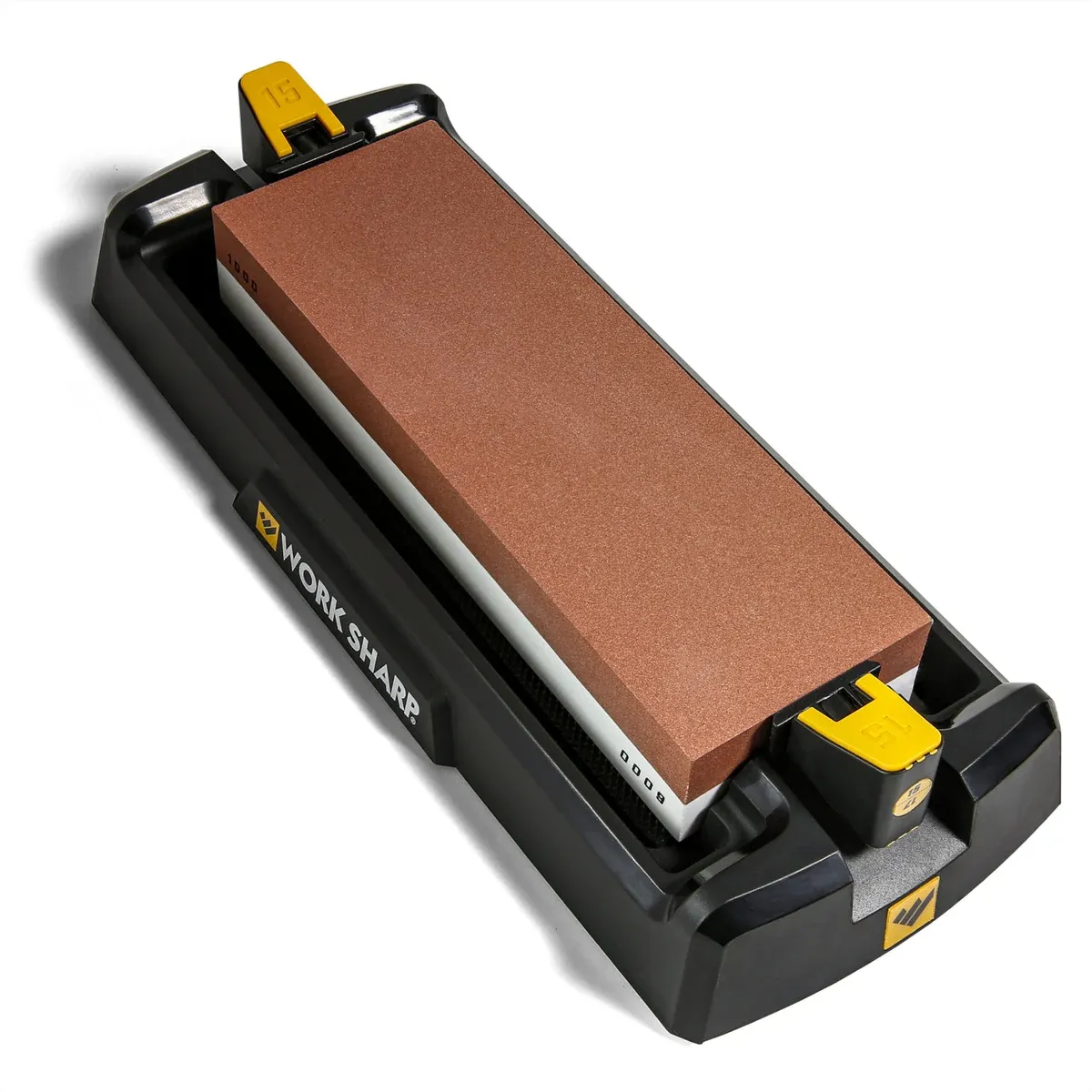
A handheld tool with preset slots: you pull the blade through a coarse slot to sharpen and a fine slot to polish or hone. Wüsthof calls it a quick alternative to a steel or stone because the angle is built in. It is the cheapest and fastest option, but you give up control.
Advantages
Preset angles mean no technique to learn; Wüsthof says to use the coarse slot only once or twice a year
Cheap and compact (Consumer Reports cites $5–$50; Work Sharp Kitchen Edge is about $22)
Drawbacks
CRKT says pull-throughs trade control for convenience and are not recommended for delicate blades
Chef's Armoury, a Japanese-knife retailer, warns they cannot match offset bevels and will damage single-bevel knives such as yanagiba or deba
Electric sharpener
Best forHouseholds that want consistent results with minimal effort
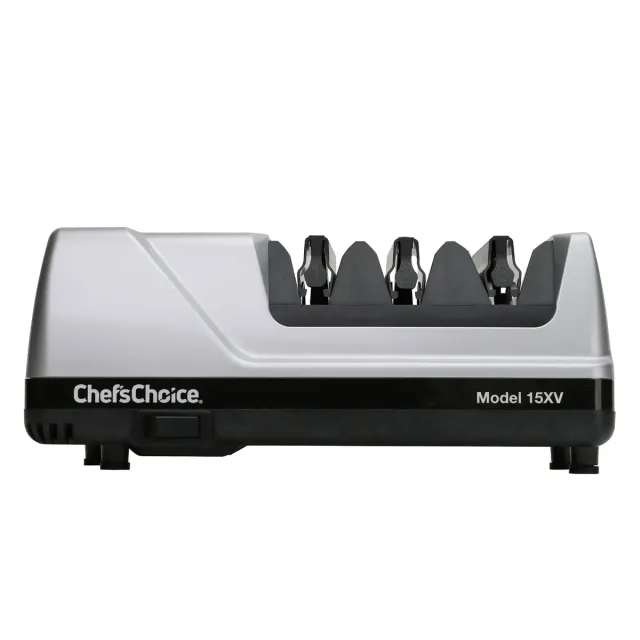
Motorized abrasive wheels sharpen the edge while spring-loaded or slotted guides hold the angle. Multi-stage models like the Chef'sChoice 15XV go from a coarse diamond stage to finer refining and stropping stages. It is the least effort for a consistent edge, but it takes counter space and removes metal quickly.
Advantages
CRKT says electric sharpeners deliver consistent results with minimal effort
Angle guides and multiple stages; Chef'sChoice says the 15XV handles straight and serrated blades and converts 20° edges to 15°
Drawbacks
Chef's Armoury argues electric pull-through sharpeners remove too much metal and shorten knife life (a retailer's opinion, not a measured figure)
Needs an outlet and counter space, and many models sharpen to one fixed angle (the 15XV only makes 15° edges)
Guided or rolling sharpener
Best forBeginners who want stone-like results without freehand skill
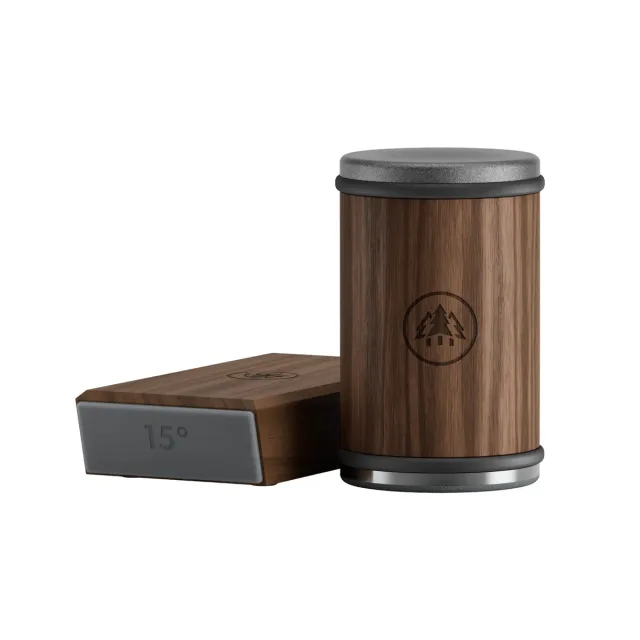
A jig holds the knife at a set angle while you move the abrasive along the edge. With the HORL, a magnetic angle support holds the blade at 15° or 20° while you roll a diamond disc, then a ceramic disc, along it. It sits between a pull-through and a freehand stone: you get stone-style sharpening without having to hold the angle.
Advantages
CRKT says guided systems hold the blade at a fixed angle and are great for beginners
Choice of angles (HORL: 15° for a fine edge on high-quality carbon or Damascus blades, 20° for sturdier European chef's knives)
Drawbacks
Among the pricier options (HORL 3 about $179)
Limited to the preset angles, and HORL does not list serrated knives for the HORL 3
Honing rod (maintenance, not sharpening)
Best forEveryone, between sharpenings
A honing steel straightens the thin edge that rolls over during use. It does not grind a new edge. Wüsthof, Shun and Consumer Reports all treat it as maintenance between sharpenings. Diamond or other 'sharpening steels' are different because they remove metal.
Advantages
Fast routine upkeep that Consumer Reports says extends the time between sharpenings
Removes no metal, so it doesn't wear the blade (Shun)
Drawbacks
Will not fix a truly dull or chipped knife; Shun says to sharpen when honing no longer restores performance
You still hold an angle by hand (Wüsthof suggests 14.5°, 10° for Asian-style knives; Shun's steel has a 16° guide)
Best forVery dull or chipped knives, single-bevel or premium Japanese knives
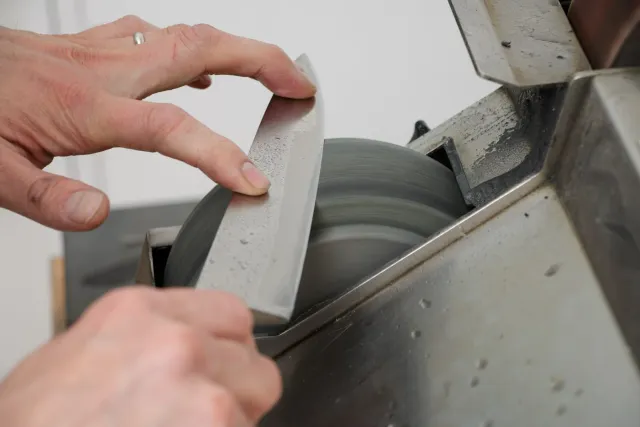
You send knives to the maker or a mail-in service, or drop them off, and get them back sharpened on professional equipment. Shun sharpens Shun knives for free on the same type of wheel used at the factory, and MAC also repairs chips and broken tips. You need no tools or skill, but you have to wait and ship.
Advantages
No skill or tools needed, and it can repair damage (MAC grinds out chips up to 1/8 inch deep and repairs tips)
Some makers sharpen their own knives cheaply or free (Shun: free sharpening, owner pays shipping)
Drawbacks
You are without your knives for a while: MAC ships back within about 2 business days of receipt, while an older Shun policy allows two weeks plus up to four weeks of round-trip shipping
MAC warns that third-party sharpening may void another brand's warranty; mail-in needs safe packaging
For most home cooks, the best way to sharpen kitchen knives is a whetstone if you are willing to practice, or a guided or pull-through sharpener with a fixed angle if you want speed and simplicity. Use a honing steel between sharpenings, and send very dull, chipped or expensive Japanese knives to a professional service.
How we compared
We compared the six common ways to keep a kitchen knife sharp using what knife makers (Wüsthof, Shun, MAC, Zwilling, Victorinox, CRKT), sharpener makers (Chef’sChoice, Work Sharp, HORL) and Consumer Reports publish. We looked at how much skill each method needs, how much control you get over the angle, which knives it suits, cost and upkeep. Prices are list prices from maker sites in October 2026 and change often. We did not test these methods hands-on.
Common sharpening mistakes
Sharpening when you only need to hone. If the knife comes back after a few strokes on a steel, it didn’t need sharpening (Shun, Wüsthof).
Pressing hard in a pull-through. Wüsthof says to let the knife’s weight do the work and to pull heel to tip, never back and forth, because extra pressure removes steel.
The wrong angle. Match the maker’s angle: 14.5° for Wüsthof and 16° for Shun. On a sharpener with presets, choose the 15° or 20° setting that comes closest.
A dry stone or an overheated edge. Keep a whetstone wet (Wüsthof). Victorinox warns that a grinding wheel needs plenty of water, because overheating lowers hardness, edge retention and corrosion resistance.
Pull-through sharpeners on single-bevel knives. Use a stone or a professional service instead.
What is the difference between honing and sharpening?
Honing realigns an edge that has rolled over in use and removes no metal. Sharpening grinds away a small amount of steel to make a new edge. Shun and Wüsthof both recommend a honing steel for routine upkeep and sharpening only when honing no longer brings the knife back.
How often should I sharpen my kitchen knives?
Less often than most people think. Shun says sharpening once or twice a year is enough for most home cooks, with honing about weekly or as needed. Wüsthof likewise says to use the coarse slot of a handheld sharpener only once or twice a year and the fine slot for regular upkeep.
Can I use a pull-through or electric sharpener on Japanese knives?
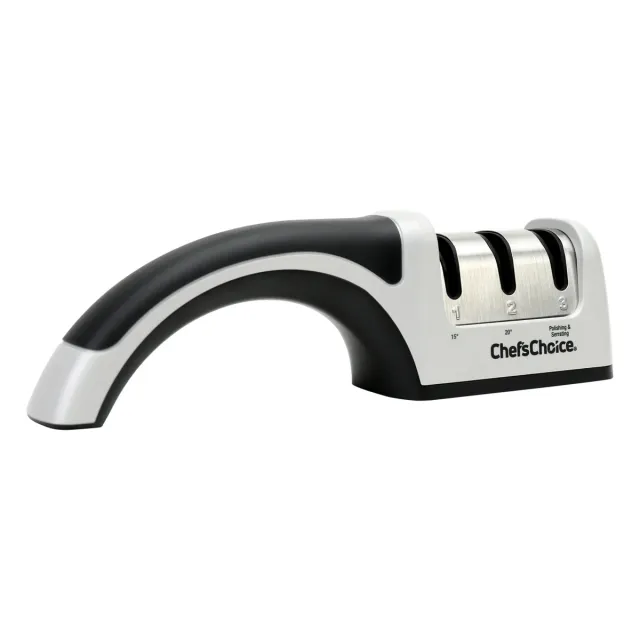
Only on double-bevel knives, and only with a tool that matches the knife's angle. Some sharpeners, such as the Chef'sChoice 4643, have a 15° slot for Asian-style double-bevel blades. Single-bevel knives such as yanagiba or deba should go on a stone or to a professional, since a pull-through can permanently damage them, and Shun offers free sharpening for its own knives.
What angle should I sharpen my knives at?
Follow the knife maker. Wüsthof uses a 14.5° angle on its steel and whetstone and 10° for Asian-style knives, and Shun sharpens to 16° per side. Sharpeners such as the Chef'sChoice 4643 and HORL 3 offer a finer 15° setting (Chef'sChoice labels it for Asian-style knives) and a sturdier 20° setting for European/American knives.
What is the best way to sharpen kitchen knives at home?
For most home cooks, a whetstone if you are willing to practice, or a guided or pull-through sharpener with a fixed angle if you want speed and simplicity. Use a honing steel between sharpenings to keep the edge straight. Very dull, chipped or expensive Japanese knives are better sent to a professional service.
Is a whetstone or an electric sharpener better for kitchen knives?
A whetstone gives the most control over the angle and finish, and it works for both Western and Japanese knives, but it takes skill and time to learn. An electric sharpener such as the Chef'sChoice 15XV gives consistent results with minimal effort, though it removes metal quickly, needs counter space and many models sharpen to one fixed angle.
Is it worth having a professional sharpen your kitchen knives?
Yes for very dull or chipped knives, and for single-bevel or premium Japanese knives, which pull-through sharpeners can damage. A service needs no tools or skill from you, and it can repair damage: MAC, for example, grinds out chips up to 1/8 inch deep and repairs tips. The downside is being without your knives while they ship back.