The best flooring for a kitchen: porcelain tile, luxury vinyl plank, engineered and solid hardwood, laminate and natural stone compared by cost, water resistance, durability and care.
Best forBusy family kitchens that see lots of spills
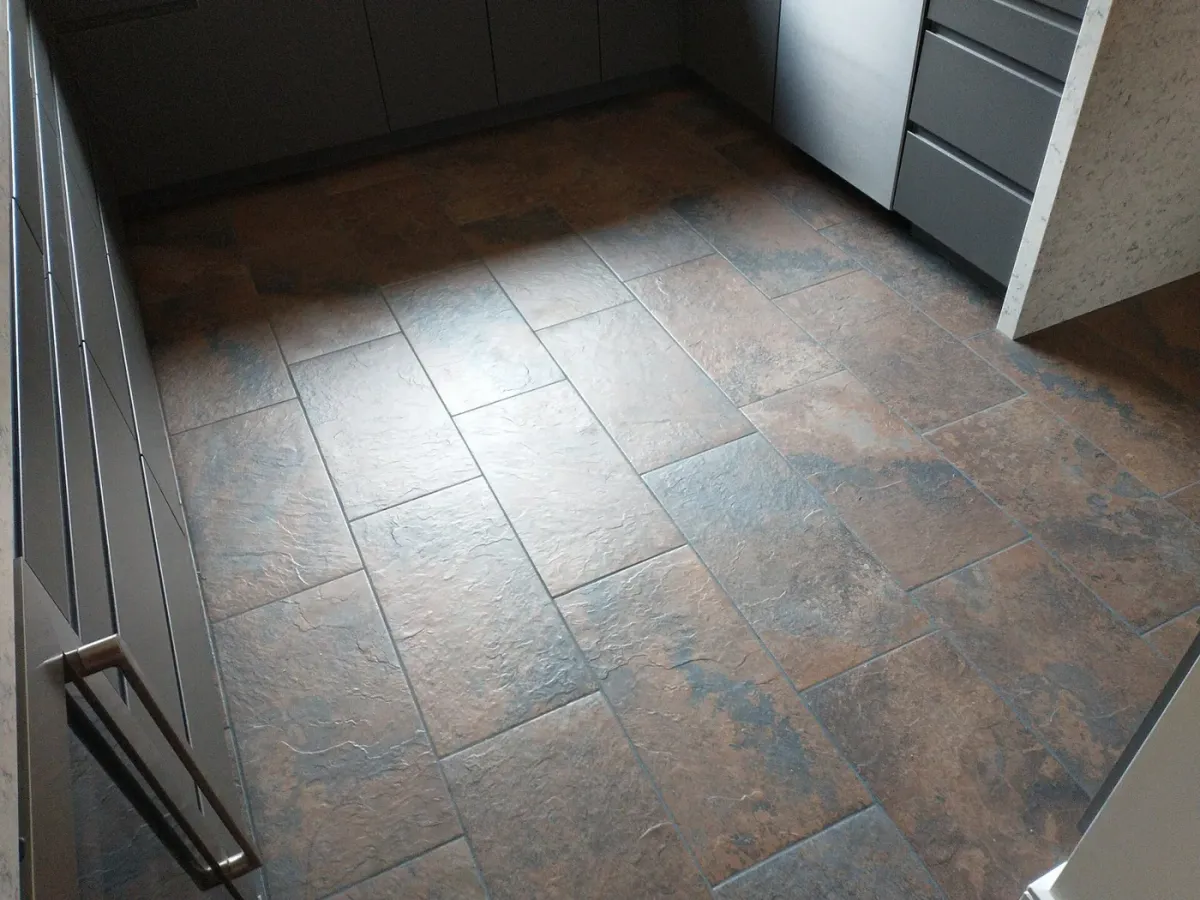
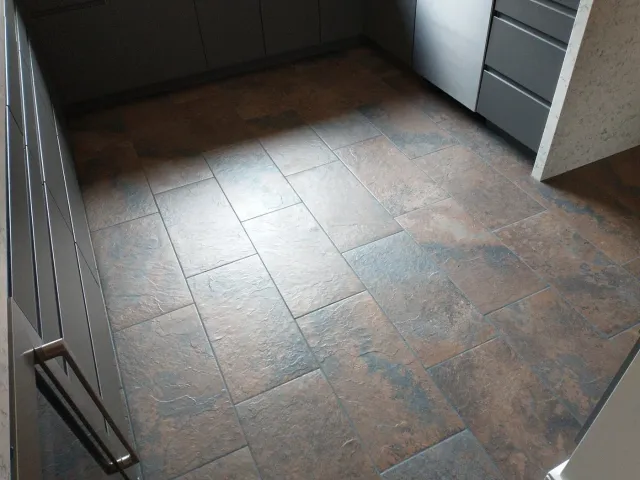
Fired clay tile set in mortar and grouted. Porcelain is the denser kind: industry standards define it as tile that absorbs 0.5% water or less, and HomeAdvisor calls it ideal for kitchens and other busy, wet rooms. Glazed ceramic costs less and is easier to cut but absorbs more water.
Advantages
Porcelain absorbs 0.5% water or less by definition, so spills stay on the surface
Durable and easy to maintain, according to HomeAdvisor
Drawbacks
Hard to install, and tiles can break when something heavy is dropped
Can be slippery when wet; check the product's slip-resistance (DCOF) rating
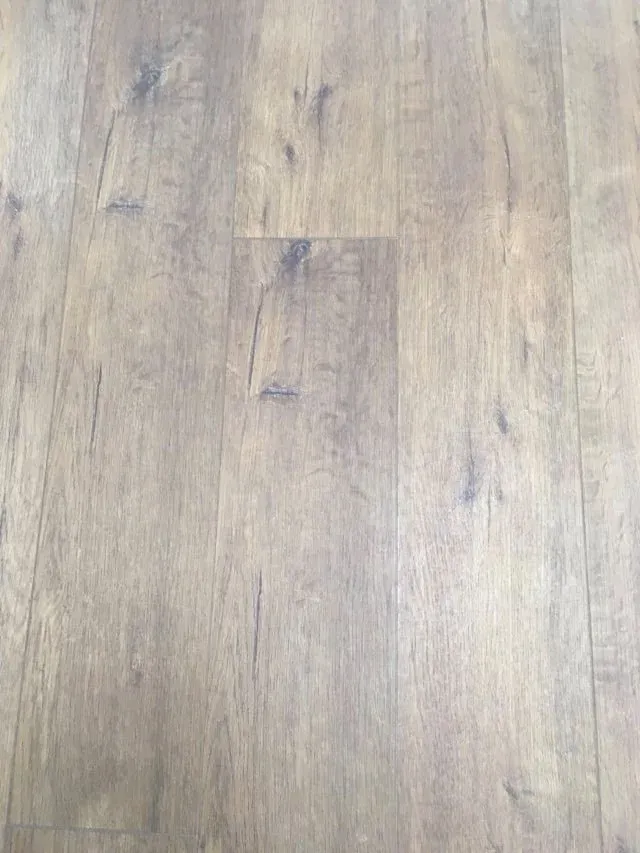
Thick vinyl planks with a printed wood or stone look under a protective wear layer. Flooring supplier MSI calls luxury vinyl 100% waterproof and lists kitchens among the rooms it suits. HomeAdvisor notes that higher-end planks mimic real wood grain.
Advantages
Waterproof and resists stains, scuffs and scratches, according to MSI
Damaged planks can be replaced one at a time
Drawbacks
Can dent if you drop something heavy or drag a heavy appliance
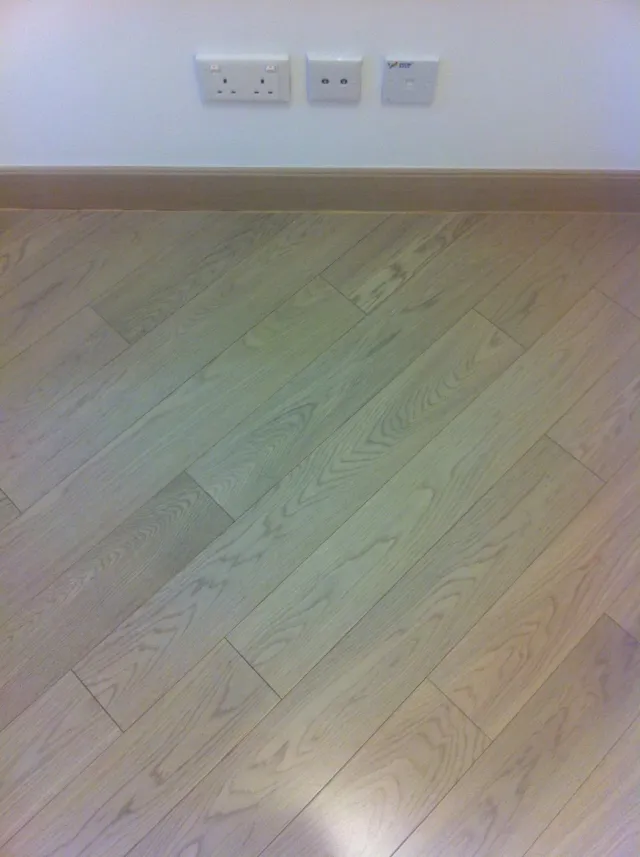
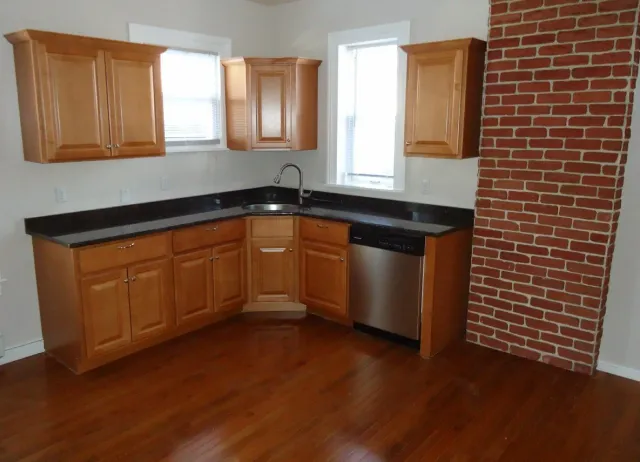
Real wood on top, bonded to layers of plywood or other wood underneath. The NWFA says engineered floors expand and contract less than solid wood, and HomeAdvisor calls the layered build more moisture-resistant. You can sand and refinish it, but fewer times than solid wood.
Advantages
Moves less with humidity than solid wood (NWFA)
Real wood surface for less than solid hardwood (HomeAdvisor)
Drawbacks
Can be refinished fewer times than solid wood
Still wood: spills must be wiped up quickly and wet mops avoided
Best forCooks who want a long-lived wood floor and can wipe up spills quickly
Each board is a single piece of wood from top to bottom. The NWFA says solid wood can be sanded and refinished many times, and HomeAdvisor says it can go in a kitchen as long as you put water-resistant mats near the sink. It reacts to moisture more than any other option here.
Advantages
Can be sanded and refinished many times (NWFA)
Classic look that matches wood floors in the rest of the house
Drawbacks
Moisture can make it cup, gap or warp (NWFA, HomeAdvisor)
Usually costs more installed than engineered wood (HomeAdvisor)
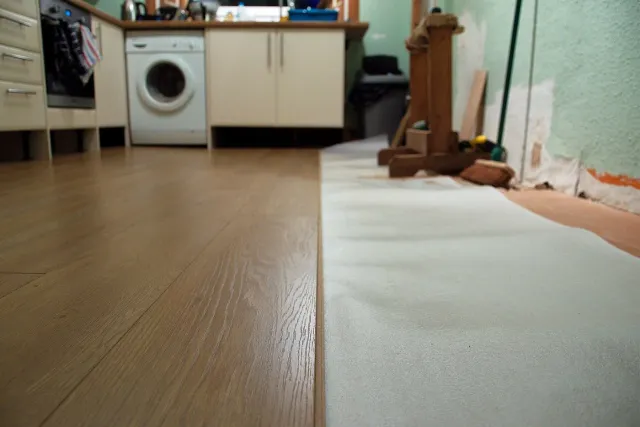
A photographic wood or stone layer over a fiberboard core, clicked together as a floating floor. Water-resistant lines such as Pergo's WetProtect are warrantied against everyday household spills and wet mopping, but not against standing water, flooding or appliance leaks. HomeAdvisor notes that laminate can often go over an existing floor.
Advantages
Low cost: HomeAdvisor lists $1 to $6.50 per sq ft for materials
Can often be installed over an existing floor
Drawbacks
Cannot be sanded or refinished
Water warranties exclude standing water, leaks and appliance failures
Best forA one-of-a-kind look if you can keep up with sealing
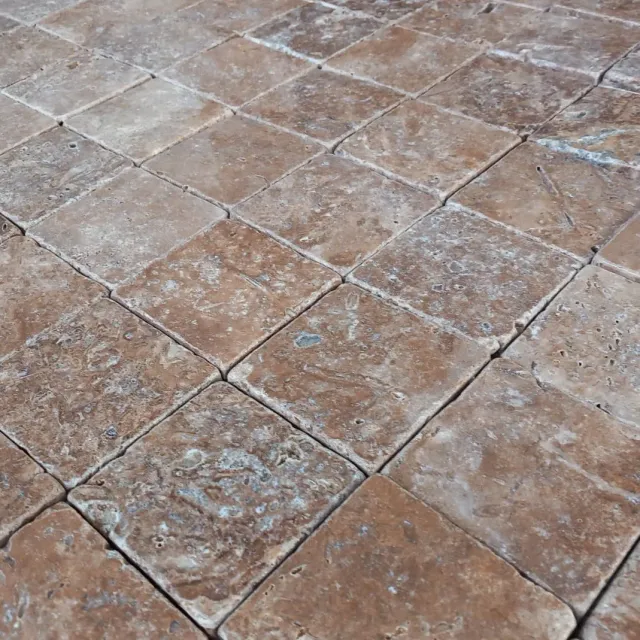
Slate, granite, travertine, limestone or marble cut into tiles. The Natural Stone Institute says slate, granite and quartzite suit busy homes best and points out that slate's texture adds grip. Soft stones such as marble and limestone scratch and stain more easily, and HomeAdvisor says most stone needs regular sealing.
Advantages
Durable and works well with radiant floor heating (HomeAdvisor)
Textured slate or honed finishes give better grip underfoot (NSI)
Drawbacks
Most types need regular sealing, and some chip easily
Acidic cleaners such as vinegar can etch marble, travertine and limestone
For most kitchens, porcelain tile is the best flooring: it shrugs off water and wear, though it is hard and can be slippery when wet. If you want a waterproof floor that usually costs less and is easier to install than tile, choose luxury vinyl plank; pick engineered hardwood or water-resistant laminate for a wood look, and natural stone or solid hardwood only if you are happy to keep up with sealing or quick spill cleanup.
How we compared
We compared six common kitchen floors on water resistance, durability, comfort, upkeep and cost. Our sources were the Tile Council of North America, the National Wood Flooring Association, the Natural Stone Institute, manufacturer documents (MSI, Pergo) and HomeAdvisor’s 2026 cost guides. Cost ranges are national averages from HomeAdvisor and vary a lot by region, room size and the condition of the subfloor. We did not install or test these floors ourselves.
Common kitchen flooring mistakes
Assuming “water-resistant” means waterproof. Laminate water warranties cover everyday spills, not standing water or a leaking dishwasher (Pergo).
Ignoring slip resistance. Glossy tile and polished stone can be slippery when wet. Hard-surface flooring makers now have to publish a slip-resistance use classification under ANSI A326.3 (TCNA), so check it, or choose a textured or honed finish.
Cleaning stone with vinegar. Acidic cleaners etch marble, travertine and limestone. Use a pH-neutral stone cleaner (Natural Stone Institute).
Wet-mopping wood. The NWFA warns that wet and steam mops damage the finish and the wood over time.
Forgetting the hidden costs. Removing the old floor, repairing the subfloor and sealing stone all add to the per-square-foot price (HomeAdvisor).
What is the most water-resistant kitchen flooring?
Porcelain tile and luxury vinyl plank are the strongest choices. Porcelain is defined as tile that absorbs 0.5% water or less, and MSI describes luxury vinyl as 100% waterproof. Water-resistant laminate covers only everyday spills: Pergo's WetProtect warranty excludes standing water, flooding and appliance leaks.
Can you put hardwood floors in a kitchen?
Yes. HomeAdvisor says hardwood can go in a kitchen if you put water-resistant mats near the sink. The NWFA recommends wiping spills right away with a dry or slightly damp cloth, avoiding wet and steam mops, and keeping indoor humidity at 30% to 50% to prevent cupping and gaps. Engineered wood moves less with humidity than solid wood.
Is porcelain or ceramic tile better for a kitchen floor?
Porcelain is the safer bet for a busy kitchen. HomeAdvisor says it is denser and absorbs less water than ceramic, though it can cost a little more. Ceramic is lighter and easier to cut, which makes it a good choice for walls or floors that see little traffic.
How much does new kitchen flooring cost?
HomeAdvisor puts a typical kitchen and dining area (about 437 sq ft) at $3,060 to $15,300, depending mainly on the material. Tiling a kitchen floor alone typically runs $800 to $3,000. Labor usually takes about 60% of the budget, and taking up the old floor costs extra.
What is the best vinyl flooring for a kitchen?
Luxury vinyl plank (LVP) is the vinyl style to look for. Flooring supplier MSI calls luxury vinyl 100% waterproof and lists kitchens among the rooms it suits, and a damaged plank can be replaced on its own. Its weak points are dents from dropped items or dragged appliances and fading in direct sunlight.
What is the best laminate flooring for a kitchen?
Choose a water-resistant laminate such as Pergo's WetProtect line, which is warrantied against everyday household spills and wet mopping. The warranty does not cover standing water, flooding or appliance leaks, so water-resistant does not mean waterproof. Laminate cannot be sanded or refinished, but it can often go over an existing floor.
What is the best wood flooring for a kitchen?
Engineered hardwood is the better wood choice for most kitchens. The NWFA says it expands and contracts less than solid wood, and HomeAdvisor calls its layered build more moisture-resistant. You still need to wipe spills quickly and avoid wet or steam mops. Solid hardwood can work too if you put water-resistant mats near the sink.