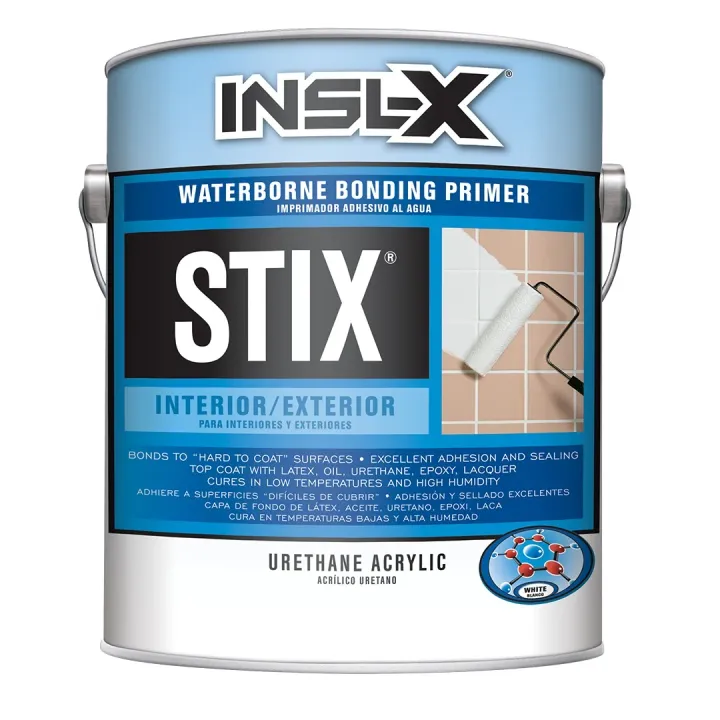
Grips glossy paint, tile, PVC and fiberglass; topcoats with almost any paint.
Odor, VOC & cleanup · 8.5
VOC under 100 g/L, low odor, soap-and-water cleanup; applies down to 35°F.
Recoat speed · 7.0
30 minutes to touch but 3-4 hour recoat, slower than other primers here.
Stain & knot blocking · Not rated
The documented information does not establish this criterion.
Based on documented features and practical tradeoffs, not a hands-on test. Assessment: October 7, 2026. How we score
Best forMost cabinet repaints, including glossy finishes, with soap-and-water cleanup
A waterborne acrylic-urethane bonding primer that INSL-X says grips hard-to-coat surfaces such as glossy paint, tile, PVC and fiberglass. It can be topcoated with almost any paint, including latex and oil.
Strengths
Bonds to glossy and hard-to-coat surfaces; can be applied as low as 35°F
Soap and water cleanup with low odor compared with oil or shellac
Weaknesses
3-4 hour recoat is slower than the fast-dry primers here
Benjamin Moore lists 4 days before return to service
Sticks to glossy surfaces without scuff sanding; interior, exterior spot priming only.
Odor, VOC & cleanup · 5.5
High VOC (max 550 g/L), flammable; cleanup needs denatured alcohol or ammonia solution.
Recoat speed · 9.5
20 minutes to touch, 45-minute recoat, the fastest here.
Stain & knot blocking · 9.5
Blocks stains, odors and knots; strongest stain blocker here, per Zinsser.
Based on documented features and practical tradeoffs, not a hands-on test. Assessment: October 7, 2026. How we score
Best forSealing knots, grease and water stains before painting
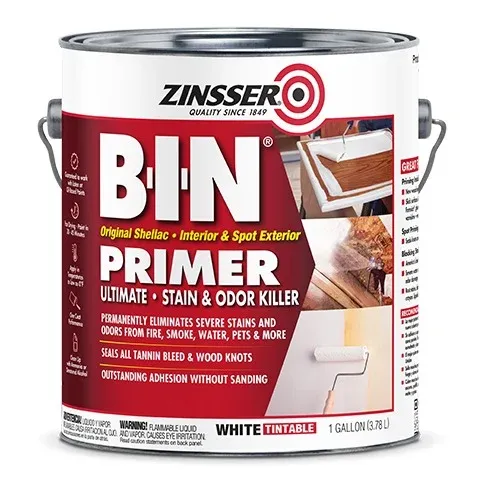
The original shellac-base primer-sealer, which Zinsser says blocks stains, odors and wood knots and sticks to glossy surfaces without scuff sanding. It dries to the touch in about 20 minutes and can be recoated in 45 minutes.
Strengths
Strongest stain and knot blocker here, per Zinsser
Fastest recoat of the group at 45 minutes
Weaknesses
High VOC (max 550 g/L) and flammable; needs good ventilation
Cleanup needs denatured alcohol or ammonia solution, not plain water
Dimensions, material and details
Dimensions
1 pt, 1 qt, 1 gal or 5 gal; about 500 sq ft per gallon
Material
Shellac base (denatured alcohol solvent)
Dry / recoat time
20 minutes to touch; 45 minutes to recoat
VOC
Max 550 g/L
Clean up
Denatured alcohol, acetone, ammoniated detergent or 99% isopropyl alcohol
Bonds to glossy enamel, varnish, laminate without sanding; full adhesion takes 7 days.
Odor, VOC & cleanup · 6.0
VOC 450 g/L; solvent-based with mineral spirits cleanup.
Recoat speed · 8.5
30 minutes to touch, 1-hour recoat.
Stain & knot blocking · 8.5
Blocks water, smoke and nicotine stains.
Based on documented features and practical tradeoffs, not a hands-on test. Assessment: October 7, 2026. How we score
Best forOil-primer fans who want strong adhesion and stain blocking for less
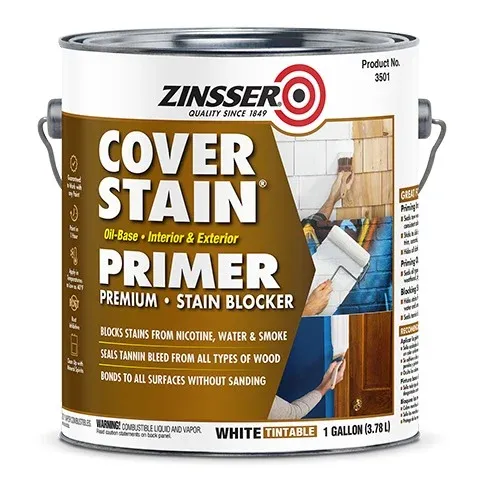
An all-purpose oil-base primer-sealer that Zinsser says sticks to glossy enamels, varnish, paneling, laminate and ceramic tile without sanding or deglossing. It blocks water, smoke and nicotine stains and works under oil or water-based topcoats.
Strengths
Bonds to varnish and laminate without sanding, per Zinsser
Dries to touch in 30 minutes and recoats in 1 hour
Weaknesses
Solvent-based: VOC 450 g/L and cleanup with mineral spirits
Full adhesion takes 7 days to develop
Dimensions, material and details
Dimensions
1 qt, 1 gal, 3 gal or 5 gal; 400-450 sq ft per gallon
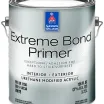
Lists kitchen cabinets, laminates and varnished wood; sanding may not be needed.
Odor, VOC & cleanup · 8.5
Waterborne with VOC under 50 g/L; cleanup not stated in the file.
Recoat speed · 8.5
1-hour recoat as primer; 4 hours when used as a stain sealer.
Stain & knot blocking · 6.5
Usable as a stain sealer, but needs 4-hour recoat; no stain claims beyond that.
Based on documented features and practical tradeoffs, not a hands-on test. Assessment: October 7, 2026. How we score
Best forLaminate, thermofoil-style and other slick cabinet surfaces
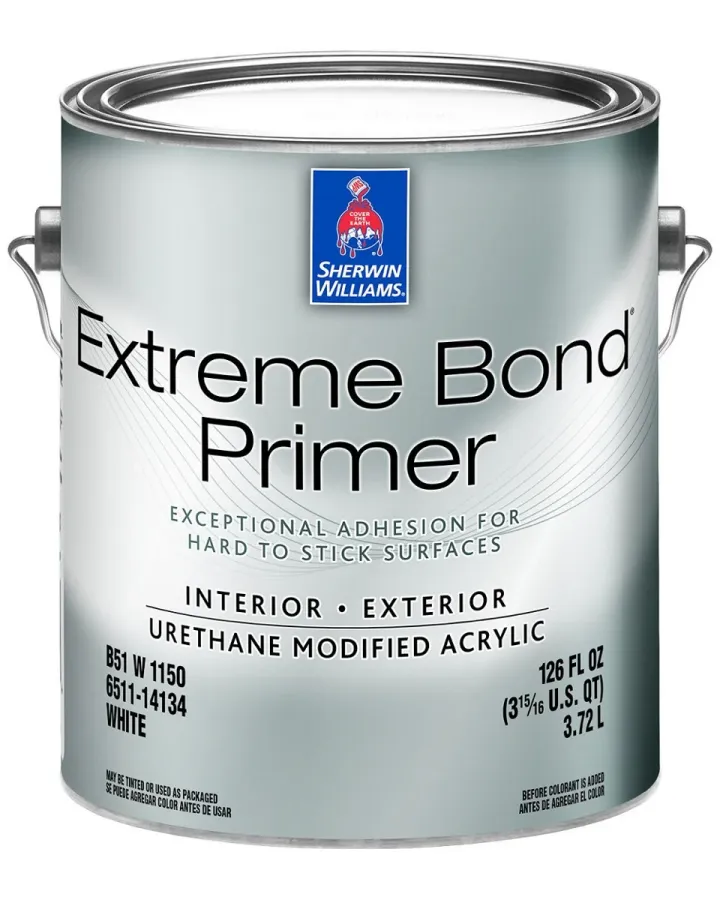
A waterborne urethane-modified acrylic bonding primer that Sherwin-Williams designed for hard, slick surfaces and lists for kitchen cabinets, wall laminates and varnished woodwork. Sanding may not be needed on most clean, paintable surfaces.
Strengths
Lists kitchen cabinets, laminates and varnished wood among its uses
Low VOC (under 50 g/L) with a 1-hour recoat as a primer
Weaknesses
Sold mainly through Sherwin-Williams stores
Needs 4 hours before recoat when used as a stain sealer
Dimensions, material and details
Dimensions
1 qt, 1 gal or 5 gal; 450-500 sq ft per gallon
Material
Waterborne urethane-modified acrylic
Dry / recoat time
30 minutes to touch; 1 hour to recoat (4 hours as a stain sealer)
VOC
Less than 50 g/L
Application
Brush, roller or airless spray (.015-.021 in tip); do not reduce
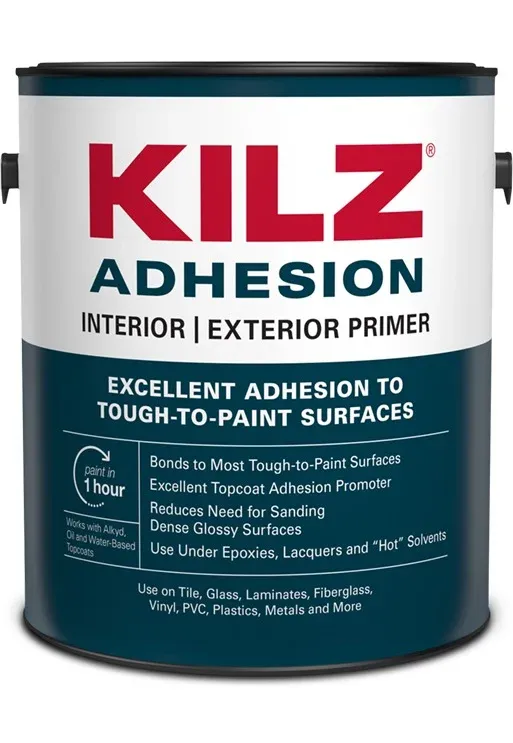
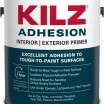
Bonds to Formica, vinyl, tile and glossy paint; adhesion test still advised.
Odor, VOC & cleanup · 8.5
Water-base, VOC under 100 g/L, warm soapy water cleanup.
Recoat speed · 8.5
30 minutes to touch, 1-hour recoat; must be topcoated within 30 days.
Stain & knot blocking · Not rated
The documented information does not establish this criterion.
Based on documented features and practical tradeoffs, not a hands-on test. Assessment: October 7, 2026. How we score
Best forTile, PVC, vinyl and laminate surfaces where sanding is hard
A water-base, styrenated-acrylic bonding primer that KILZ says reduces or can eliminate sanding on dense, glossy surfaces such as Formica, vinyl, tile, glass and glossy paint. It dries to the touch in 30 minutes and can be recoated after 1 hour.
Strengths
Fast 30-minute touch dry and 1-hour recoat
Soap and water cleanup with a lifetime limited warranty
Weaknesses
KILZ still recommends a small adhesion test before starting
Tile, PVC, vinyl and laminate surfaces where sanding is hard
1 qt or 1 gal; 300-400 sq ft per gallon
Water-base styrenated acrylic
30 minutes to touch; 1 hour to recoat
OUR METHOD
How we scored
Manufacturer specs, not hands-on tests. Each pick is rated out of 10 on four things:
35%Adhesion & surface fit
25%Odor, VOC & cleanup
20%Recoat speed
20%Stain & knot blocking
What to look for in a cabinet primer
Match primer to surfacebonding primers for slick surfaces, stain-blockers for knots and stains
Weigh odor and cleanupwater-based cleans with soap; oil and shellac block stains better
Check recoat timesome recoat within an hour, others need several
Frequently asked questions
What is the best primer for kitchen cabinets?
INSL-X Stix Waterborne Bonding Primer is our best overall for most cabinet repaints, including glossy finishes, with soap-and-water cleanup and low odor. Choose Zinsser B-I-N shellac primer if you need to seal knots, grease or water stains. It has high VOC, is flammable, and needs denatured alcohol for cleanup.
Do I really need to prime kitchen cabinets before painting?
In most cases, yes, because cabinets often have glossy, greasy or varnished finishes that paint will not grip well. Bonding primers such as INSL-X Stix, Sherwin-Williams Extreme Bond and KILZ Adhesion are made for hard, slick surfaces, and Zinsser B-I-N and Cover-Stain also block stains and wood knots. Clean and degrease the surface first whichever you choose.
Shellac, oil or water-based primer: which is best for cabinets?
Shellac primer like Zinsser B-I-N is the strongest stain and knot blocker here and recoats in 45 minutes, but it has strong fumes and cleans up with alcohol. Oil primer like Zinsser Cover-Stain bonds well and blocks stains but needs mineral spirits for cleanup. Water-based bonding primers like INSL-X Stix, Sherwin-Williams Extreme Bond and KILZ Adhesion are lower in VOC and clean up with soap and water.
What is the best primer for painting laminate kitchen cabinets?
Sherwin-Williams Extreme Bond Primer is our pick for laminate and other slick surfaces. It is a waterborne bonding primer that lists kitchen cabinets, laminates and varnished wood among its uses, and it recoats in 1 hour. KILZ Adhesion also bonds to Formica and other dense, glossy surfaces, but KILZ still recommends a small adhesion test before starting.