The best kitchen cabinets for your budget and kitchen: stock, semi-custom and custom lines, solid wood, plywood, MDF and laminate, framed and frameless, compared by cost and durability.
Best forBudget remodels, rentals and standard-size kitchens
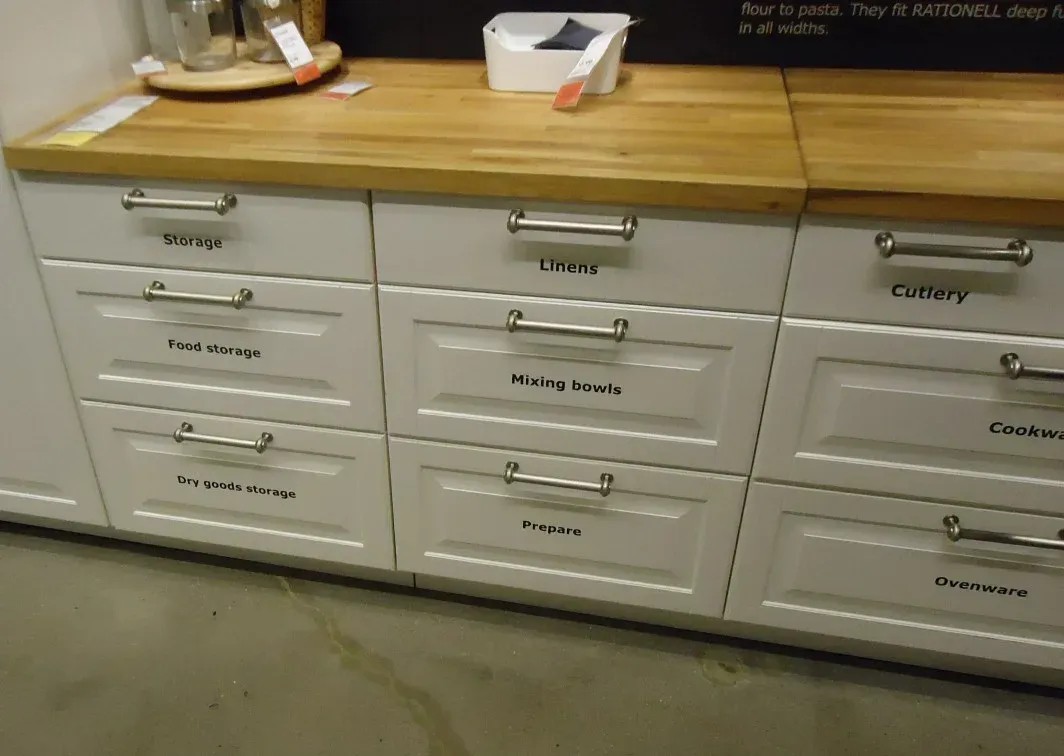
Stock cabinets are mass-produced in standard sizes and sold ready-made. Fine Homebuilding calls them the most economical choice, with the fewest options in finish and materials, and HomeAdvisor notes you may get only a few color or trim choices.
Advantages
Lowest installed cost: $100–$300 per linear foot (HomeAdvisor)
Prices stay low because the cabinets are made in large quantities (HomeAdvisor)
Drawbacks
Few choices of color, door style and trim (HomeAdvisor)
Economy lines often use vinyl-covered particleboard boxes, which Fine Homebuilding says hold screws poorly and are susceptible to water damage
Best forMost remodels that want flexibility without custom prices
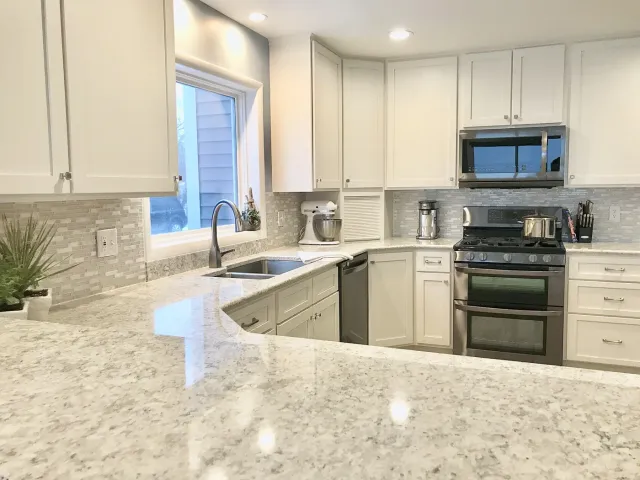
Semi-custom cabinets let you pick from more sizes, finishes, door styles and accessories within the maker's standard dimensions. Fine Homebuilding says they let you specify most but not all features, and HomeAdvisor calls them an excellent compromise between stock and custom on price and flexibility. Plywood boxes are usually available as an upgrade.
Advantages
Wider choice of sizes and features than stock (HomeAdvisor, Fine Homebuilding)
Plywood box upgrades are commonly offered (Fine Homebuilding)
Drawbacks
Higher cost: $150–$650 per linear foot installed vs $100–$300 for stock (HomeAdvisor)
Sizes are still limited to the maker's standard dimensions (HomeAdvisor)
Best forUnusual layouts, older homes and one-of-a-kind designs
Custom cabinets are designed and built for one kitchen, often by a local cabinetmaker, so they can fit odd-shaped rooms and any style. Fine Homebuilding notes they usually have the longest lead time and the highest prices. HomeAdvisor says custom solid-wood cabinets can keep their looks for 20 to 50 years with routine care.
Advantages
Built to fit any space or style (HomeAdvisor)
With quality solid wood and routine care, they can last 20 to 50 years (HomeAdvisor)
Drawbacks
Most expensive: $500–$1,200 per linear foot, and HomeAdvisor says custom adds 50% to 100% over stock or semi-custom
Longest lead time (Fine Homebuilding), and HomeAdvisor recommends a cabinet specialist to install them
Best forSink bases, heavy stone counters and kitchens you'll keep for decades
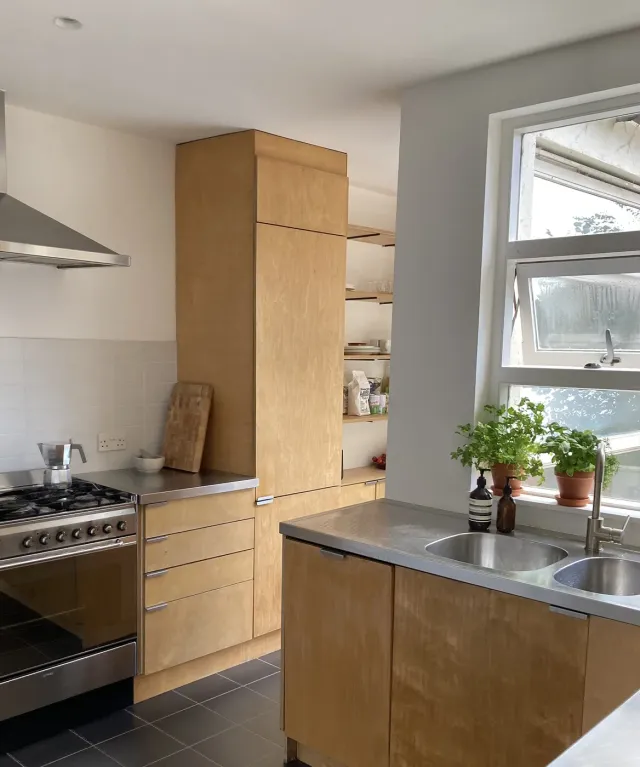
The cabinet box (the sides, back and bottom you rarely see) carries the counter and holds the hinges and drawer slides. Fine Homebuilding's advice is to choose plywood boxes even though they're hidden: plywood costs more than particleboard but holds hardware screws better, and a full 3/4-in.-thick plywood box can support heavy counters. Pair it with solid wood or veneered doors.
Advantages
Hinge and drawer-slide screws are less likely to pull out over time (Fine Homebuilding)
A damaged surface can be repainted or refinished; torn vinyl on particleboard can't be repaired
Drawbacks
Costs more than particleboard (Fine Homebuilding)
Wood still moves with humidity; Schuler warns of swelling doors and joint separation if indoor humidity swings
Best forSmooth painted finishes, especially white and colored shaker doors
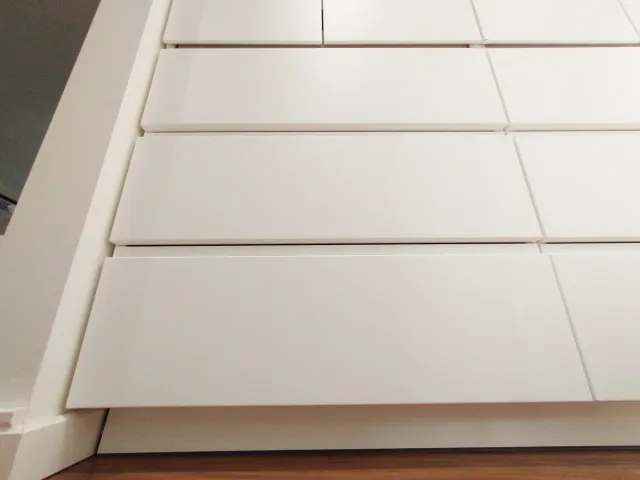
If you want painted cabinets, the door material matters. Painted solid-wood frame-and-panel doors move with the seasons, and Wolf's care guide says hairline cracks at the joints are normal on painted wood cabinets. One-piece MDF doors have no rail-and-stile joints and give paint a stable, uniform base, which is why retailer CabinetNow says contractors specify them for painted projects.
Advantages
No assembled joints, so no joint cracks or paint-line separation (CabinetNow)
Fine Homebuilding says an MDF substrate helps keep slab doors flat and free of warp
Drawbacks
Painted finishes can mellow or shift color over time with light exposure (Wolf)
On wood-frame doors with veneered MDF panels, Fine Homebuilding notes the panel can age differently from the frame, which shows on woods like cherry
Best forBudget-friendly, easy-wipe modern slab or shaker looks
Thermofoil doors are vinyl-faced, usually over MDF cores, and laminate or foil fronts such as IKEA's VOXTORP put a plastic surface layer over fibreboard. Adhesive maker H.B. Fuller says vinyl-faced doors are stable, less likely to bow or crack, moisture-resistant and usually cheaper than solid wood. Their weak point is heat: high temperatures can make the vinyl pull away from the core.
Advantages
Seamless, easy-to-clean surface that usually costs less than solid wood (H.B. Fuller)
Moisture resistance makes them common in kitchens and baths (H.B. Fuller)
Drawbacks
Heat-sensitive: self-cleaning ovens can discolor thermofoil (Schuler), and KraftMaid requires heat shields for warranty coverage on laminate doors
HomeAdvisor says laminate is hard to repair when damaged
For most remodels, the best kitchen cabinets are semi-custom cabinets with plywood boxes. They offer more sizes and finishes than stock at well below custom prices, and plywood holds hinge and drawer-slide screws better than particleboard. Choose stock cabinets if budget comes first, custom cabinets for odd-shaped rooms, painted MDF doors for a smooth painted finish, and thermofoil or laminate only away from high heat.
How we compared
We compared the three ways cabinets are sold (stock, semi-custom and custom) and the main build materials using Fine Homebuilding’s cabinet buyer’s guides, the Kitchen Cabinet Manufacturers Association’s certification program, care guides from cabinet makers (Schuler, Wolf, KraftMaid, Omega), adhesive maker H.B. Fuller, and HomeAdvisor’s 2026 installed-cost data. Prices are national ranges that include installation and vary widely by region, size and finish. We did not test cabinets hands-on.
Common mistakes when buying cabinets
Judging by the doors alone. The box carries the weight. Fine Homebuilding recommends plywood boxes even though you’ll rarely see them.
Painting solid-wood frame-and-panel doors and expecting no lines. Wolf says hairline cracks at painted joints are normal wood movement, not defects. Choose MDF doors or panels if that bothers you.
Putting thermofoil or laminate next to the oven without protection. Schuler and KraftMaid recommend heat shields, and KraftMaid requires them for warranty coverage on laminate doors.
Ignoring humidity. Schuler warns that warranties can be void if cabinets are stored or installed in extreme temperature or humidity.
Skipping certification. A KCMA A161.1 seal shows the design passed structure, door, drawer and finish tests.
What's the difference between framed and frameless cabinets?
Framed cabinets have a face frame of stiles and rails attached to the front of the box, and doors either overlay that frame or sit inset within it. Frameless (European or full-access) cabinets have no face frame. Doors cover the box edges for a sleeker look and slightly more interior space (Omega Cabinetry). Fine Homebuilding adds that without a frame to stiffen the box, high-quality 3/4-in. material matters even more.
Is plywood or particleboard better for kitchen cabinets?
Plywood is the sturdier choice. Fine Homebuilding says particleboard doesn't hold screws as well and is susceptible to water damage, while plywood keeps hinge and slide screws secure and can be refinished. Particleboard keeps prices down, so it's common in economy stock lines.
How can I tell if cabinets are well made?
Look for the KCMA A161.1 certification seal. The Kitchen Cabinet Manufacturers Association tests a design's structure, drawers, doors and finish to simulate a lifetime of use. In the showroom, check for thick box sides, tight gap-free face-frame joints and solid drawer boxes. Fine Homebuilding recommends hardwood drawer sides 5/8 in. to 3/4 in. thick and well-made dovetail joints.
How much do new kitchen cabinets cost?
HomeAdvisor puts professional cabinet installation at $1,935–$10,765, with an average of $6,189. By the linear foot, it lists $100–$300 for stock, $150–$650 for semi-custom and $500–$1,200 for custom, installed. With about 24 linear feet in an average kitchen, totals range from roughly $2,400 to $28,000.
What is the best wood for kitchen cabinets?
For the cabinet box, Fine Homebuilding's advice is plywood, which holds hinge and drawer-slide screws better than particleboard, and a full 3/4-in. plywood box can support heavy counters. Pair it with solid wood or veneered doors. If you want painted doors, one-piece MDF avoids the joint cracks that Wolf says are normal on painted solid wood.
What are the best kitchen cabinets for the money?
For most remodels, semi-custom cabinets with plywood boxes. They offer more sizes and finishes than stock, and HomeAdvisor calls them an excellent compromise between stock and custom on price and flexibility. Stock cabinets are the most economical if budget comes first, but economy lines often use particleboard boxes.
What is the best material for kitchen cabinets?
Plywood is the most robust common box material, according to Fine Homebuilding, and a damaged plywood surface can be repainted or refinished. For doors, solid wood suits a stained look, painted MDF gives a smooth painted finish, and thermofoil or laminate is a budget-friendly, easy-wipe option that should stay away from high heat.